
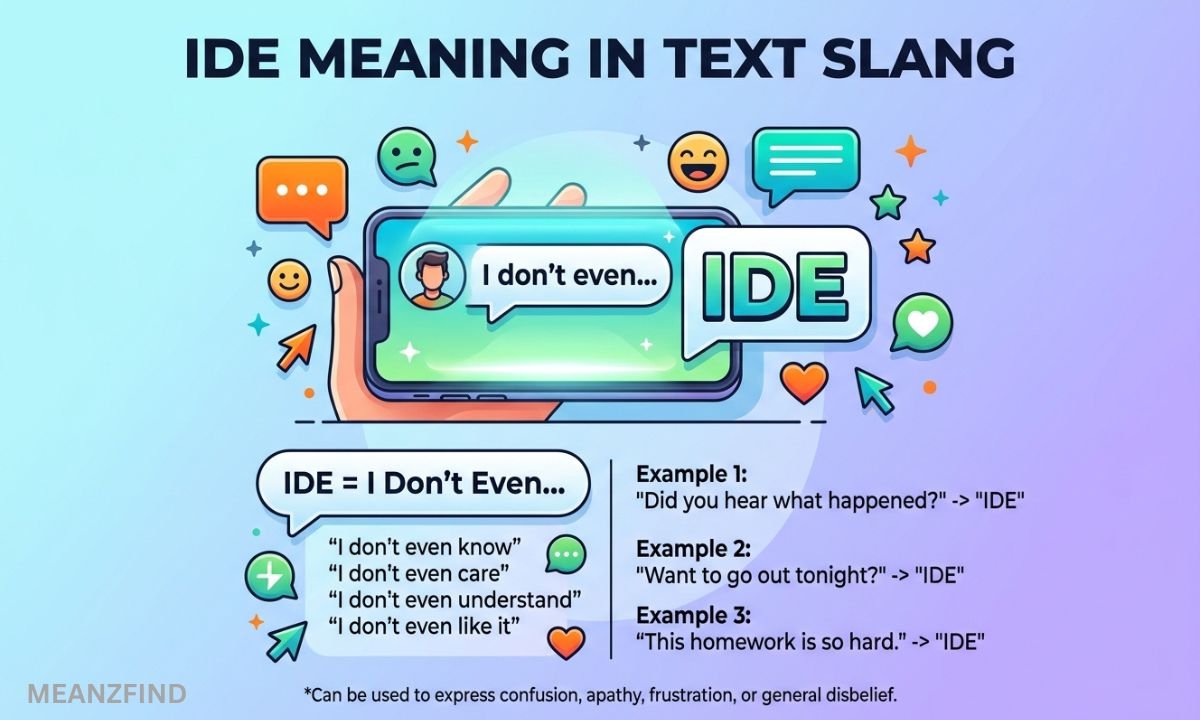
You get a text that just says “IDE.” You stop and wonder what it means. You are not alone. Many people see this short slang and feel confused. It looks like a tech word, but in chat it means something else.
In text slang, IDE usually stands for “I don’t even.” People use it when they are shocked, amused, or lost for words. It can show that something is too funny, too weird, or too much to explain. Sometimes people also use “ide” as a quick way to type “idea.”
This guide keeps it simple. You will learn the clear definition of IDE. You will see real examples you can use in your own chats. You will also find easy replies for when someone sends it to you. Let’s get started.
IDE Meaning in Text Slang – Quick Meaning
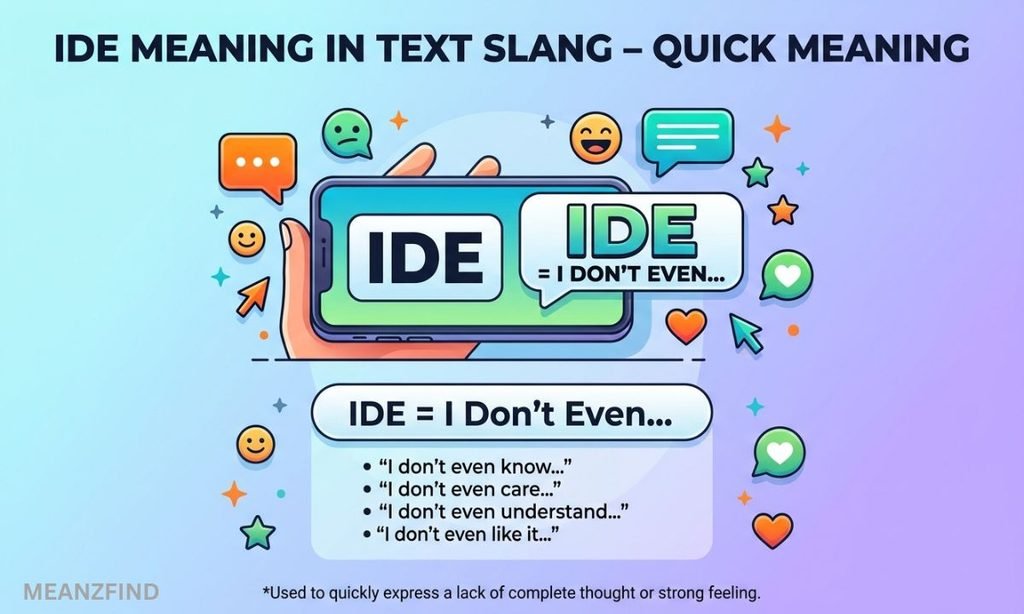
IDE in text slang most often means “I don’t even.” People type it when they are shocked, amused, confused, or too surprised to say more. It is a short way to say, “I have no words for this.”
Here is the quick answer in a list:
- Most common meaning: “I don’t even” (a reaction to something wild or funny)
- Sometimes: a fast, lazy way to type “idea”
- Sometimes: a typo for “IDK” (I don’t know) or “IDEK” (I don’t even know)
- Outside of slang: a computer term for software that programmers use
Context matters a lot. The words around IDE, the mood of the chat, and the person sending it all tell you which meaning fits.
IDE Meaning in Text Slang
Let’s look closer at each meaning. This way you will never feel lost when you see it.
Meaning 1: “I Don’t Even”
This is the meaning you will see most. “I don’t even” is an old internet phrase. People use it when something is so surprising that they cannot finish the sentence. The full version is often “I don’t even know what to say.”
Example: Your friend sends a photo of a cat wearing a tiny hat and sunglasses. You reply, “IDE 😂”
Meaning 2: Short for “Idea”
Some people cut words short to type faster. “Idea” becomes “ide.” You will see this in phrases like “no ide” or “good ide.”
Example: “I have no ide where my keys are.”
Meaning 3: A Typo or Mix-Up
Keyboards are small. Fingers slip. Sometimes IDE is a typo for IDK or IDEK. If the sentence makes more sense with “I don’t know,” the person likely made a typing mistake.
Meaning 4: The Tech Word
IDE also means “Integrated Development Environment.” That is a program where coders write and test software. You will not see this meaning in a friendly chat. It shows up in tech talk, school computer classes, and job chats.
Quick Meaning Table
| Meaning | When You See It | Mood |
| I don’t even | After shocking or funny news | Surprised, amused |
| Idea | “No ide,” “good ide” | Casual, neutral |
| Typo for IDK/IDEK | Sentence talks about not knowing | Unsure |
| Integrated Development Environment | Coding or tech talk | Serious, technical |
Origin & Background of IDE in Slang
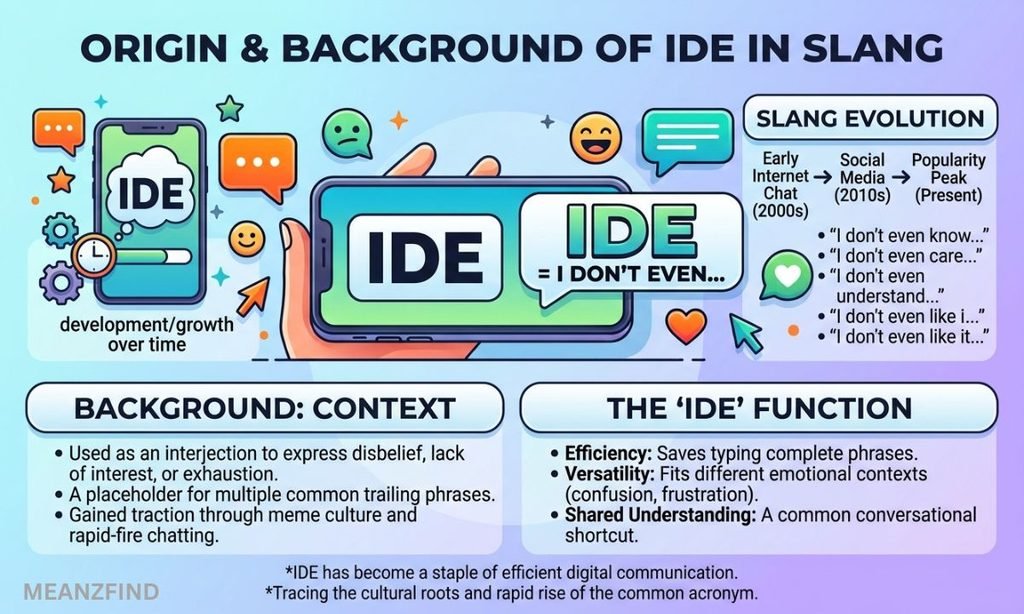
Nobody can point to one person who invented IDE. Like most slang, it grew slowly in chats, comments, and posts. Let’s see how it likely came to be.
Where “I Don’t Even” Came From
The phrase “I don’t even” became popular on social media in the early 2010s. People used it in posts and replies when they were overwhelmed by something silly, cute, or shocking. Soon it became a full joke on its own.
Then came the shortcuts. People love to type less. So “I don’t even” turned into “idek,” “ide,” and other short forms.
Why IDE Is Less Famous Than IDK
IDK is known by almost everyone. IDE is newer and smaller. It is used by fewer people. Because of that, it does not have one strict meaning yet. That is why the same three letters can mean different things in different chats.
A Friendly Reminder
Slang changes fast. A short word can mean one thing in your group chat and another in someone else’s. If you are unsure, ask. Nobody minds a quick “wait, what does that mean?”
Why Abbreviations Became Popular
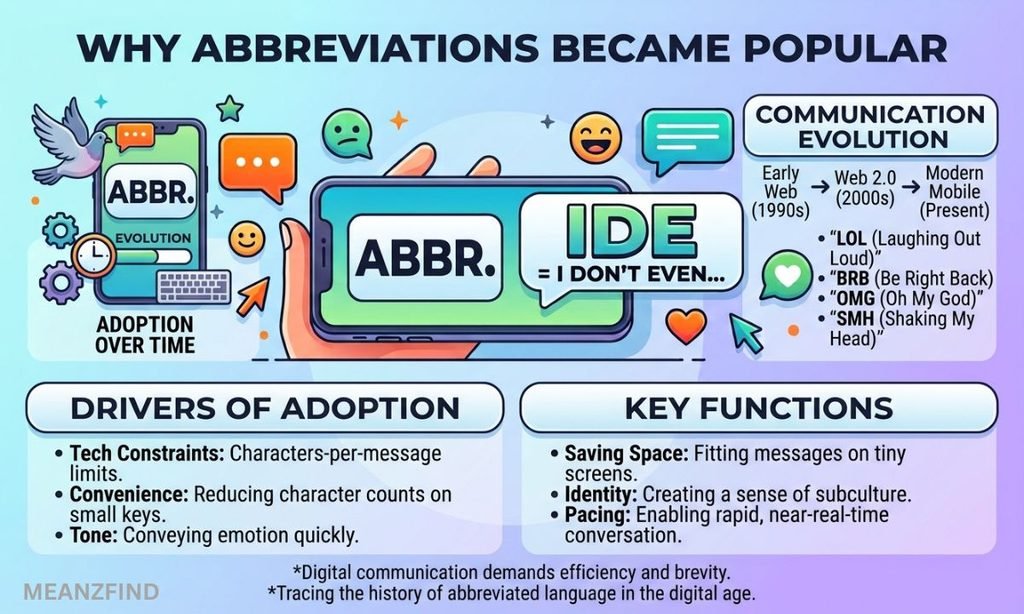
People did not start using short forms to be lazy. There were real reasons.
Old Phones Had Limits
Early text messages had a small character limit. Typing on number keys was slow. So people shortened words to fit more into one message.
Typing Fast Feels Natural
Chats move quickly. When friends talk back and forth, nobody wants to wait. Short words keep the chat moving.
Short Words Show Feelings Fast
A tiny word like “IDE” can carry a big feeling. It says “I’m shocked” or “I’m laughing” in one beat. That is hard to do with a long sentence.
They Make Groups Feel Close
When you and your friends share the same short words, it feels like a secret club. Using slang shows that you belong.
Reasons at a Glance
- Saves time
- Saves space
- Feels friendly
- Shows emotion fast
- Builds group identity
Real-Life Conversations Using IDE
Examples help most. Here are four chats that show how IDE works in real life.
1. WhatsApp Chat
Sara: Guess what? My brother ate a whole cake by himself.
Ali: The whole cake??
Sara: Yes. Even the box got crumbs.
Ali: IDE 😂😂
What it means: Ali is saying, “I don’t even. That is too wild for words.”
2. Instagram DM Conversation
Mina: Did you see the new post from that page?
Zoya: The one with the dog riding a scooter?
Mina: Yes!
Zoya: ide. This is the best thing today.
What it means: Zoya is amazed and amused. She does not need more words.
3. TikTok Comment Section
A video shows a baby copying its dad’s dance moves perfectly. The comments fill up:
- “IDE the baby has better moves than me”
- “ide 😭😭😭”
- “the way he looked at the camera, IDE”
What it means: Everyone is saying they are too charmed or amazed to explain.
4. Text Message Example
Hamza: Do you have any ide what time the bus comes?
Bilal: No ide, sorry. Check the app?
What it means: Here, “ide” is just a short form of “idea.” There is no shock or joke. It is simply a quick way to type.
What These Chats Teach Us
- IDE as “I don’t even” appears after funny or shocking things.
- IDE as “idea” appears in normal questions and answers.
- Emojis often show which meaning is used.
IDE Meaning in Text Slang TikTok
TikTok moves fast. Comments are short. Videos are packed with surprises. That makes it a perfect home for reaction slang like IDE.
How TikTok Users Use IDE
On TikTok, IDE mostly means “I don’t even.” People drop it under videos that leave them speechless. It can be about something funny, cute, strange, or impressive.
Common TikTok patterns:
- Alone: “IDE” with a laughing or crying emoji
- With a reason: “IDE the way she said that”
- In a joke chain: Many people repeat it under one comment
Why It Fits TikTok Culture
TikTok comments are fast. Nobody writes a paragraph. A three-letter reaction lets you join the fun in a second.
Also, TikTok loves inside jokes. When a phrase catches on, it spreads like wildfire. People copy it, twist it, and use it for laughs.
Tips for Using IDE on TikTok
- Add an emoji so people understand your mood.
- Keep it short. Do not explain the joke.
- Do not use it under sad or serious videos.
- If people ask what it means, reply kindly.
Emotional & Psychological Meaning
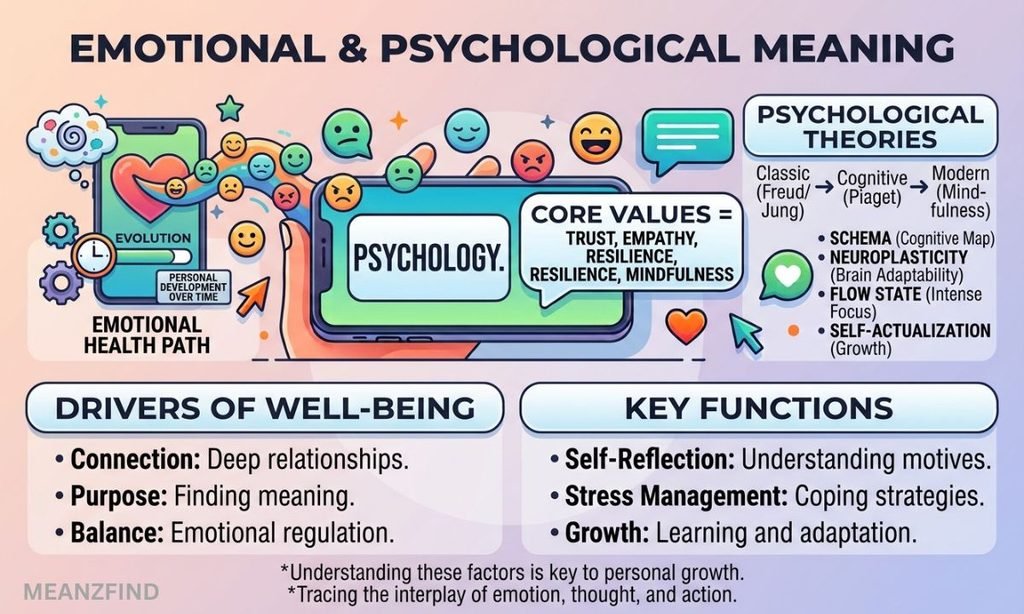
Slang is not only about words. It is about feelings too. IDE carries a special kind of feeling.
What IDE Really Says
When someone types IDE, they usually mean:
- “This is too much.”
- “I can’t explain how I feel.”
- “This is so funny or strange that words fail me.”
It is a small pause in text form. It shows that the person is stunned or delighted.
Feelings IDE Can Show
| Feeling | Example |
| Amusement | Someone shares a hilarious video |
| Shock | A friend shares surprising news |
| Disbelief | A story sounds too strange to be true |
| Frustration | Someone does something annoying |
| Joy | You get wonderful news and cannot find words |
Tone Changes Everything
The same three letters can feel happy or annoyed. A laughing emoji makes it fun. A flat, lonely “ide.” with a period might mean the person is tired or fed up. Always look at the mood of the whole chat.
Why People Relate to It
Why does a tiny word like IDE feel so real? There are good reasons.
It Matches How We Feel
Sometimes life is just too much, in a good or a bad way. Nobody has the right words every time. IDE gives people permission to say, “I don’t have them either.”
It Removes Pressure
You do not need to write a perfect reply. Just send IDE and the other person understands. It is easy and honest.
It Builds Shared Laughs
When two people both react with IDE, they feel connected. They are laughing at the same thing. That small link matters.
It Sounds Like Real Speech
We say “I can’t even” and “I don’t even” out loud. Typing IDE keeps that spoken feeling alive in text.
Usage in Different Contexts
IDE works differently in different places. Let’s explore the main ones.
1. Social Media
Social media is the best place for IDE. Comments, replies, and captions are short and playful.
Where you will see it:
- Comments under funny videos
- Replies to friends’ stories
- Captions with a joke or reaction
Example: A caption reads, “When your mom finds your old photos. IDE.”
2. Friends & Relationships
Among friends, IDE is easy and fun. You can use it to react to gossip, jokes, or wild stories.
With close friends: Use it freely. They will understand.
With a partner: It works too, but add a friendly emoji. A blunt “ide.” may sound cold.
Example:
Friend: He texted me “good morning” after ignoring me for a week.
You: ide 😭
3. Work or Professional Settings
Slang is risky at work. Your boss or clients may not know what IDE means. They might also confuse it with the tech word.
Best advice:
- Avoid IDE in emails to managers or clients.
- Skip it in official reports and messages.
- Use it only with close coworkers in casual chat, if at all.
Note for tech teams: If your job involves coding, IDE already means software. Using it as slang can confuse people.
4. Casual vs Serious Tone
| Situation | Should You Use IDE? | Why |
| Joking with friends | Yes | Fits the fun mood |
| Reacting to a funny video | Yes | Quick and playful |
| Talking about bad news | No | May sound rude |
| Writing to a teacher | No | Too casual |
| Job email | No | Not professional |
| Group chat with family | Maybe | Only if they know slang |
Common Misunderstandings
Many people mix up IDE. Let’s clear up the biggest mistakes.
Misunderstanding 1: Thinking It’s a Typo
Some people see IDE and think the sender made a mistake. That can be true sometimes. But often it is on purpose.
How to tell:
- If the person is reacting to something funny or shocking, it is probably “I don’t even.”
- If the sentence is about not knowing something, it might be a typo for IDK.
- If it comes with a number or a plan, it might mean “idea.”
When in doubt, read the whole message again.
Misunderstanding 2: Confusing It with Technical Terms
If you Google IDE, you will mostly find articles about coding software. That is because IDE is a very common tech word.
Do not let that confuse you in a friendly chat. A friend who sends “IDE 😂” is not talking about a code editor. They are reacting to something funny.
Misunderstanding 3: Using It Too Formally
Some people use IDE in a serious message. That can cause confusion or even offend someone.
Bad example: “Thank you for your email. IDE.”
Better example: “Thank you for your email. I am not sure how to respond yet.”
Keep slang for casual talk.
Other Small Mix-Ups
- Thinking it always means the same thing: Slang is flexible. Check the mood.
- Thinking it is rude: Most of the time it is just playful.
- Thinking everyone knows it: Many people do not. Explain if needed.
Comparison Table
Here is a simple table to compare IDE with similar phrases.
| Slang | Full Form | Meaning | Mood |
| IDE | I don’t even | Speechless reaction | Shocked or amused |
| IDEK | I don’t even know | Completely unsure | Confused |
| IDK | I don’t know | Simple “no idea” | Neutral |
| IDC | I don’t care | Not interested | Bored or annoyed |
| SMH | Shaking my head | Disappointed | Annoyed |
| TBH | To be honest | Sharing honest thoughts | Casual |
| IYKYK | If you know, you know | Inside joke | Playful |
Main takeaway: IDE is about being speechless. IDK is about not knowing. IDC is about not caring. They may look alike, but each one says something different.
Variations and Related Expressions
IDE has many cousins in the slang world. Knowing them helps you read chats with ease.
1. IDEK
Meaning: “I don’t even know.”
People use this when they are very confused. It is like IDK, but stronger.
Example: “Why is my phone charging so slowly? idek.”
2. IDTS
Meaning: “I don’t think so.”
This is a soft way to disagree.
Example: “Will it rain today? idts.”
3. SMH
Meaning: “Shaking my head.”
You use it when something is disappointing or silly.
Example: “He forgot his own birthday. smh.”
4. ICYMI
Meaning: “In case you missed it.”
People use it to share news or posts someone may have missed.
Example: “ICYMI, the class is moved to Friday.”
5. TBH
Meaning: “To be honest.”
You use it before sharing an honest opinion.
Example: “tbh, I liked the first movie more.”
6. FWIW
Meaning: “For what it’s worth.”
You use it when you give advice or an opinion that may or may not help.
Example: “fwiw, I think you should ask her.”
7. IDK
Meaning: “I don’t know.”
This is one of the most used slang words online. It is simple and clear.
Example: “idk where I left my bag.”
8. IDC
Meaning: “I don’t care.”
It can sound rude, so use it carefully.
Example: “idc which movie we watch, you pick.”
9. IYKYK
Meaning: “If you know, you know.”
It points to an inside joke or shared secret.
Example: “That canteen samosa, iykyk.”
10. SMFH
Meaning: “Shaking my freaking head.”
This is a stronger form of SMH. It shows more frustration.
Example: “They cancelled the match again. smfh.”
Quick Summary of Related Slang
- Speechless or shocked: IDE
- Confused: IDEK, IDK
- Disappointed: SMH, SMFH
- Honest thoughts: TBH, FWIW
- Information sharing: ICYMI
- Disagreement or no interest: IDTS, IDC
- Inside joke: IYKYK
How to Respond When Someone Uses IDE
Not sure how to reply? Here are easy options for each mood. Pick the one that fits.
Casual Replies
Use these with friends when the chat is light.
- “Right? 😂”
- “I know, it’s crazy!”
- “Same, I have no words either.”
- “Wait till you see the next part.”
- “Tell me about it.”
Funny Replies
Want to keep the laughs going? Try these.
- “IDE too, my friend.”
- “We are all speechless here.”
- “Someone call the words department.”
- “I’m still trying to understand it.”
- “This is the plot twist of the day.”
Mature or Supportive Replies
Sometimes IDE hides stress or sadness. Use these when the other person might need support.
- “Are you okay?”
- “That sounds like a lot. Want to talk?”
- “I’m here if you need me.”
- “Take a breath. What happened?”
- “Do you want advice or just someone to listen?”
Private or Respectful Replies
Use these if you want to keep things calm and private.
- “Can I call you later?”
- “Let’s talk about it in person.”
- “I’d like to hear more when you’re ready.”
- “Thanks for telling me. I’ll keep it private.”
Reply Chooser Table
| The Other Person Seems | Best Reply Type | Example |
| Laughing | Funny | “This is peak comedy.” |
| Shocked | Casual | “I know, right?” |
| Upset | Supportive | “Want to talk about it?” |
| Confused | Helpful | “Want me to explain?” |
| Private | Respectful | “Let’s talk later.” |
Regional & Cultural Usage
Slang travels across the world, but each place adds its own flavor. Let’s see how IDE fits into different cultures.
Western Culture
In the United States, the United Kingdom, and Canada, “I don’t even” is well known. Young people use it a lot in chats and posts. The short form IDE is less common, but people understand it from the mood.
Slang here changes fast. Something popular this year may sound old next year.
Asian Culture
In many Asian countries, English slang mixes with local languages. Young people in Pakistan, India, and other countries often switch between English and their own language in one message.
You might see something like, “Yaar, ide 😂” or a mix of English slang and local words. IDE may be understood through tone and emoji, even if not everyone knows the full form.
Middle Eastern Culture
In the Middle East, many people chat in Arabic and English. Some use English slang for fun, especially on social media. Others prefer to write in their own language, and some type Arabic words in English letters.
IDE is less common here, but people who follow global trends may use it in playful chats.
Global Internet Usage
The internet connects everyone. A funny video from one country can spread around the world in hours. Slang spreads the same way.
What this means for you:
- Do not assume everyone knows IDE.
- Be ready to explain it.
- Pay attention to emojis and tone. They work in every language.
Culture Comparison Table
| Region | How Common Is IDE? | Typical Style |
| Western countries | Occasionally seen | Casual, playful |
| Asian countries | Growing among youth | Mixed with local words |
| Middle Eastern countries | Less common | Mixed language chats |
| Global social media | Spreading slowly | Short and emoji-based |
Tips For IDE Meaning in Text Slang
Here are simple tips to use IDE the right way.
Tips for Understanding IDE
- Read the full message. The words around IDE tell you what it means.
- Look at the emojis. A laughing face and a sad face change everything.
- Think about who sent it. A close friend and a teacher use slang differently.
- Check the topic. Tech talk means the software meaning. Fun talk means “I don’t even.”
- Ask if you are unsure. A quick question saves confusion.
Tips for Using IDE
- Use it with friends. It is best in casual chats.
- Add an emoji. It makes your mood clear.
- Keep it short. IDE works best on its own or with a few words.
- Avoid it at work or school. Choose full sentences there.
- Do not overuse it. Too much slang can make your message hard to read.
Tips for Replying to IDE
- Match the mood. Laugh with a laughing person. Be kind to a stressed person.
- Ask a gentle question. “What happened?” keeps the chat going.
- Do not judge. Everyone reacts in their own way.
- Offer help when needed. A small kind reply can mean a lot.
Quick Do and Don’t List
| Do | Don’t |
| Use IDE with friends | Use IDE in job emails |
| Add emojis for clarity | Assume everyone knows it |
| Read the mood of the chat | Use it under sad news |
| Explain it if asked | Mix it up with tech terms |
| Keep messages friendly | Use slang in every sentence |
FINAL WORDS
Now you know what IDE means in text slang. Most of the time, it stands for “I don’t even.” People use it when they feel shocked, amused, or speechless. Sometimes it is just a quick way to type “idea.” The context tells you which one it is.
Reading the chat around it is the best trick. If someone shares wild news and sends “IDE,” it means “I don’t even.” If they are talking about plans and type “no ide,” they mean “no idea.” A quick look at the mood saves you from a mix-up.
Using IDE is easy. Keep it for casual chats with friends and family. Skip it in work emails or formal messages. If you are not sure the other person knows it, just write the full phrase.
Replying is easy too. You can match the mood with “Same!” or “Right?” You can also ask, “What happened?” to keep the chat going. Slang changes fast, but the goal stays the same: understand each other and enjoy the conversation.
FAQs
What does “IDE” stand for in text?
In text, IDE usually stands for “I don’t even.” People use it when they are shocked, amused, or have no words.
What does IDR mean in slang?
IDR means “I don’t remember” or “I don’t recall.” People use it when they cannot think of a name, date, or detail.
What does “IDE” mean?
IDE most often means “I don’t even” in chats. Outside of slang, it means “Integrated Development Environment,” a program that coders use.
What does slang mean in a chat conversation?
Slang means casual, informal words and short forms that friends use when they chat. Examples are IDK, TBH, and SMH, which save time and show feelings fast.
What does idt mean in slang?
IDT means “I don’t think.” People use it to politely disagree or to say they are not sure about something.
What’s IDR in chat?
In chat, IDR means “I don’t remember.” It is a quick way to say your memory of something is blank.
What does IDR mean on Instagram?
On Instagram, IDR also means “I don’t remember.” You will see it in DMs, comments, and replies to stories.
What does Twitter mean in slang?
In slang, “Twitter” means the social media platform for short posts, now called X. People also use it to describe online talk or public chatter, like “Twitter is going crazy today.”
What does IDE stand for in gaming?
IDE is not a common gaming slang term. In game development, it means “Integrated Development Environment,” and some gamers also type it as “I don’t even” when shocked.
What does “ide” mean in Urban Dictionary?
Urban Dictionary entries are written by users, so meanings can vary. The most common slang meaning is “I don’t even,” and some people also use it for “idea.”
What does “ids” mean on Snapchat?
“IDS” has no fixed slang meaning on Snapchat. Most often it is the plural of “ID,” or a typo for “IDK” (I don’t know), so check the chat for context.