
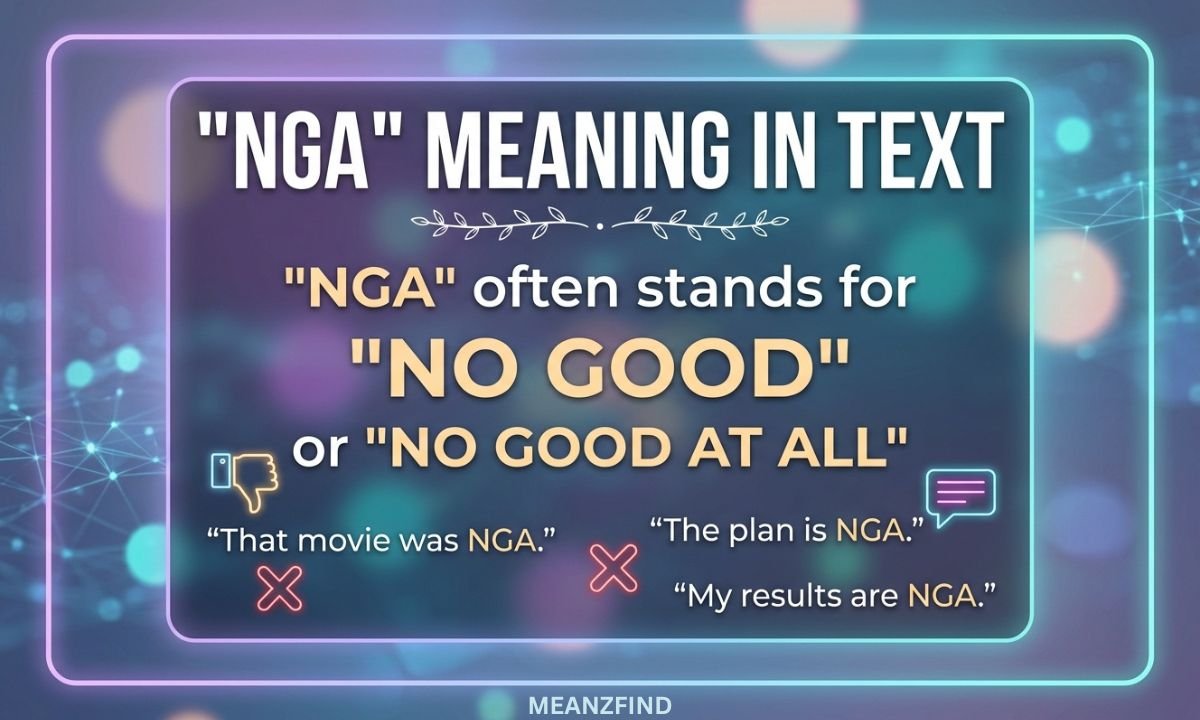
You see “NGA” in comments, captions, and group chats. It looks short and harmless, so many people feel confused about it. In most cases, it is a shortened or altered form of a racial slur. That is why it gets so much attention online.
The meaning can change a little based on who says it and where. Some people use it as a casual word in slang. Others use it to mock or hurt someone. Many people find it offensive no matter how it is spelled or shortened.
In this article, you will learn what NGA means in text and on social media. You will also see how people use it and why it can cause problems. By the end, you will know when to avoid it and what to say instead.
NGA Meaning in Text – Quick Meaning
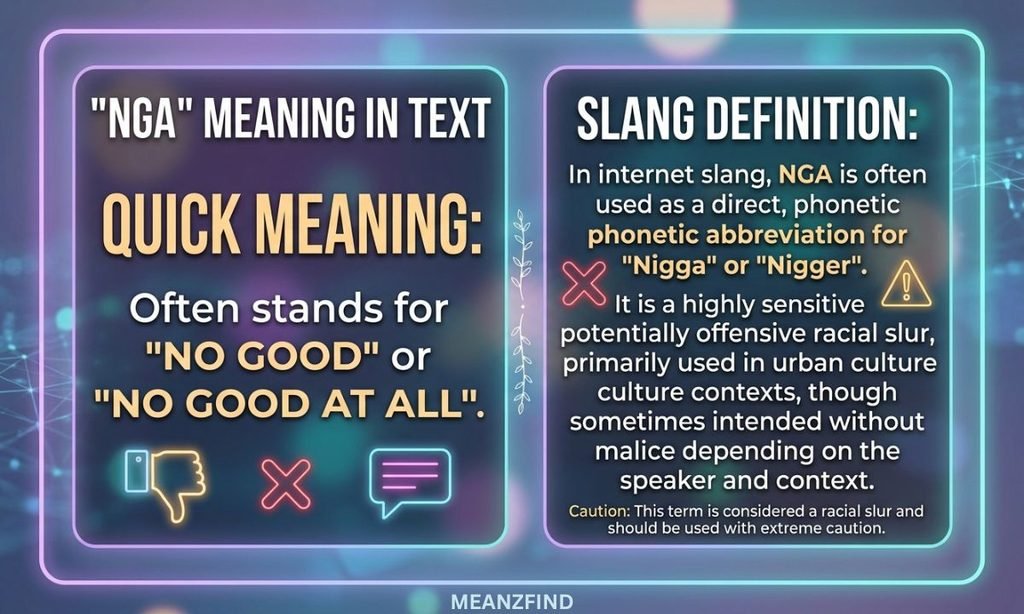
Quick answer: NGA is a short, changed spelling of the n-word, which is a racial slur. Some people use it as casual slang with friends. Many other people find it hurtful, no matter how it is spelled.
Simple Definition
NGA is an altered form of a racial slur aimed at Black people. People shorten or reshape the word when they type it. They do this to move faster, to get past chat filters, or to make the word feel softer.
The shorter spelling does not change the history behind the word. It still carries the same weight for many readers. That is why NGA is not a harmless abbreviation like “LOL” or “BRB.”
Here is the meaning in one line:
- NGA in text = a shortened spelling of a racial slur, used as slang by some and seen as offensive by many.
Quick Examples
Here are a few ways the word shows up online. These are examples of what you might see, not lines to copy.
- A user types it as a stand-in for “dude” or “bro” in a friend chat.
- A commenter uses it in an angry reply to put someone down.
- A person drops it into a joke or meme caption.
- A song fan quotes it from a lyric in a comment.
The same three letters can feel friendly in one chat and cruel in another. The words around it, the people involved, and the tone all change the result. That is the main thing to understand about NGA.
Origin & Background
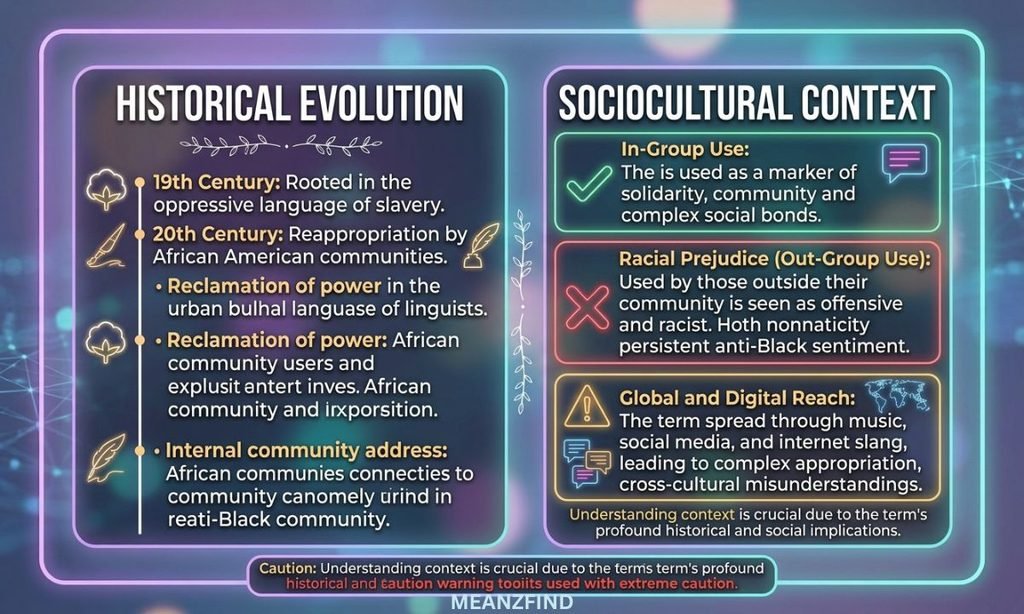
The word it comes from has a painful history. It was used for a very long time to insult and demean Black people. It was tied to slavery, segregation, and violence.
Over the years, some Black communities took a version of the word and used it among themselves. This changed how it sounded in music, comedy, and daily talk. Even so, many Black people never use it, and many dislike it when others do.
Online, the word split into many spellings. NGA is one of the short forms. People type it in chats and comments because it is quick, and because apps often block the full word. The short spelling spread fast, but the debate around it never went away.
NGA Meaning in Text
In a text message, NGA usually means one of two things. It can be a casual word some people use for “man,” “bro,” or “guy.” Or it can be a direct insult aimed at someone.
You cannot tell which one it is from the letters alone. You need to look at who sent it and what was said before it. A joke between old friends reads very differently from a message sent by a stranger.
Because of this, NGA is a risky word to use. Even if you mean no harm, the reader may not take it that way. A message is just words on a screen, so tone and smiles do not travel with it.
Real-Life Conversations (How People Actually Use It)
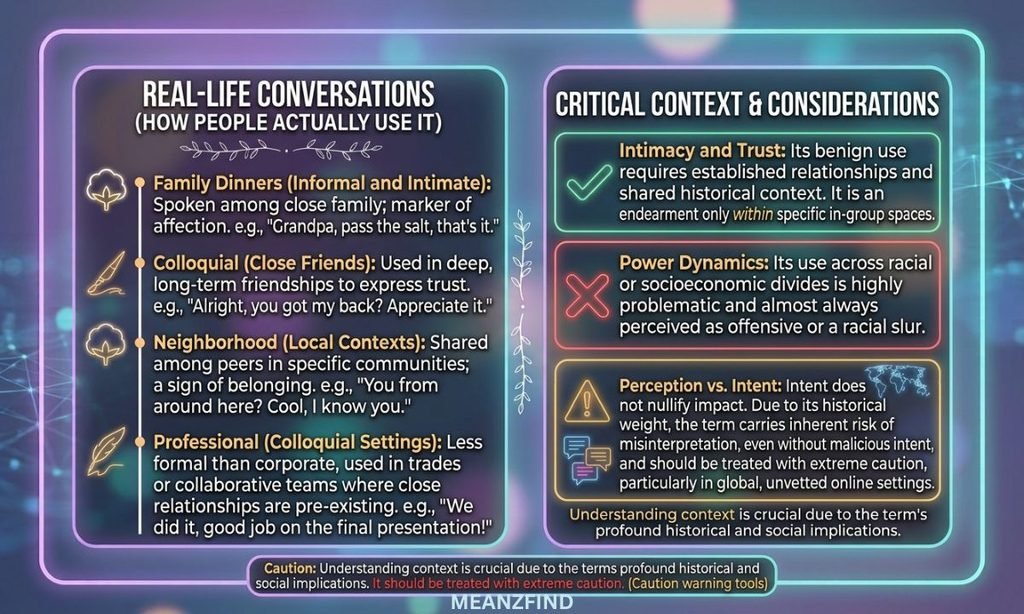
Real chats show how fast the meaning can shift. Below are the main places you will see this word, and what usually happens in each one.
WhatsApp Chat
In private groups, some friends use the word as slang in jokes. Others in the same group may feel uncomfortable but stay quiet. Silence in a group chat does not mean everyone is fine with it.
Group chats also grow. A new member joins, and the old jokes land in front of someone who does not know the rules. A word that felt normal can suddenly cause an argument.
Instagram DMs
On Instagram, people use the word in quick replies and in reactions to stories. The chat feels private, but screenshots are easy. A message meant for one friend can end up on a public page.
Many users also report DMs that use the word as an attack. If this happens to you, you can block the person and report the chat.
TikTok Comments
TikTok comments are public, and the platform filters many harmful words. That is one reason people change spellings like this. The filter may miss the short form, but moderators and other users often do not.
Comments with this word often get reported. Videos can lose reach, and accounts can face limits. Replies also tend to turn into long fights.
Text Message
In a plain text, there is no group around you. It is just you and one other person. If your friend uses the word, you can talk to them in a calm way.
Texts also stay on your phone. You can read them again later, and so can the other person. A word you type in a hurry can come back to you.
Emotional & Psychological Meaning
Words carry feelings, and this one carries a lot. For many Black people, the word brings up a history of pain and being treated as less than others. Seeing it in a chat can feel like a small hit, even if it was meant as a joke.
For people who use it in a friendly way, it may feel like a sign of closeness. They may feel it belongs to their group and their culture. This is a real viewpoint, but it is not shared by everyone inside that group.
Here is why the same word can cause such different reactions:
- Personal history: Each person has their own past with the word.
- Who is speaking: The same word feels different from a friend than from a stranger.
- Tone: A kind tone and a hateful tone are easy to tell apart in person, but not in text.
- Audience: People nearby may feel hurt even if they were not part of the chat.
If you are unsure how someone feels, it is better to ask than to guess.
Usage in Different Contexts
The same word lands in different ways in different places. Always think about where you are before you type.
Social Media
On public sites, many people can see your post. The word can get you reported, muted, or banned. It can also change how people see you in the future.
Brands, schools, and employers often check social media. A single comment can follow you for years. Public posts are never fully private, even if you delete them.
Friends & Relationships
Between close friends, the word may be used in different ways. Some groups use it freely. Other groups never use it at all.
In a relationship, the best rule is to respect the other person’s limits. If your partner or friend says it bothers them, stop using it. A joke is not worth hurting someone you care about.
Work or Professional Settings
At work, this word is never a good choice. It can break company rules and lead to a warning or job loss. It can also hurt your coworkers and make them feel unsafe.
Keep your emails, chats, and work messages free of it. If someone uses it at work, you can report it to a manager or HR.
Casual vs Serious Tone
A casual tone might make the word seem lighter. A serious tone makes it feel like a direct attack. But tone is hard to read in text.
When in doubt, treat the word as serious. It is much easier to avoid a fight than to fix one.
NGA Meaning in Text Slang
As slang, NGA works like a nickname. Some people use it the way others say “dude,” “bro,” or “man.” It can show up at the start of a message or at the end of a sentence.
Slang changes quickly, and this one has been around for a long time in many forms. New spellings keep popping up as apps ban old ones. That makes it hard to track.
Slang rules are not the same for everyone. A word that is normal in one group can be offensive in another. You can never be sure which group you are talking to online.
If you want a friendly slang word that is safe in every chat, pick one that has no painful history. Words like “bro,” “dude,” “mate,” and “man” do the same job without the risk.
NGA Meaning in Text Funny
Some people use this word in jokes and memes. They think the shock makes it funny. Others laugh because the group does, even if they feel unsure inside.
The problem is that humor depends on the audience. What makes one person laugh can make another person feel hurt. A joke that needs the listener to ignore their own feelings is not a good joke.
Here are some signs a joke has gone too far:
- Someone goes quiet after it.
- Someone asks you to stop.
- Someone leaves the chat.
- The joke only works because of a painful history.
If you want to be funny, there are many other ways to get a laugh. Try wordplay, silly stories, or funny pictures. You will get the laugh without the risk.
Common Misunderstandings
People often get this word wrong. Here are the four most common mistakes.
1. Thinking It’s Always Safe to Use
Some people think it is fine because they heard it in a song or a show. But hearing it does not mean it is safe for everyone to say. The speaker, the audience, and the place all matter.
2. Assuming It Has One Fixed Meaning
The word does not mean the same thing in every chat. It can be a joke, a nickname, or an insult. You have to read the full situation to know.
3. Using It Publicly Without Awareness
A public post can reach thousands of people. Many of them will have strong feelings about the word. Using it in public can lead to reports, bans, and angry replies.
4. Confusing It With Other Abbreviations
The three letters N-G-A also appear in other places, and this causes mix-ups. For example, “NGA” is the three-letter country code for Nigeria. It is also the short name of some groups and agencies. In texting, people also mix it up with lookalike slang such as NGL, which means “not gonna lie.”
If you see these letters on a map, a flight board, or a news story, they probably mean something else. Always check the context before you decide.
Comparison Table
This table shows how the meaning can change based on the situation.
| Situation | Likely Meaning | How It Feels to Readers | Risk Level |
| Private chat between close friends | Casual slang for “bro” | Mixed, depends on the group | Medium |
| Public social media comment | Slang or insult | Often seen as offensive | High |
| Message from a stranger | Insult or attack | Hurtful | Very high |
| Work email or chat | Rule-breaking language | Unprofessional and harmful | Very high |
| Country code, map, or news | Nigeria or a group name | Neutral | None |
| Song lyric quoted in a comment | Quote from art | Mixed, still risky | Medium |
Key Insight
The same three letters can mean a friendly nickname, a cruel insult, or a country code. The meaning depends on who sends it, who reads it, and where it appears. Since you cannot control how a reader feels, the safest choice is to leave this word out of your messages.
Variations / Types of NGA Usage
People use this word in a few different ways. Knowing the types can help you read a message better.
- Casual address: Used like “bro” or “dude” between friends.
- Joking use: Dropped into memes and jokes for shock or laughs.
- Quoting: Repeating a lyric, a line from a video, or something someone else said.
- Hostile use: Used to attack, mock, or insult a person or group.
- Filter dodging: Spelled in a new way to get past app rules.
- Non-slang meaning: The letters stand for Nigeria or a group name.
Each type has a different level of harm. Hostile use is the most serious. Filter dodging often shows that the sender knows the word is not allowed.
How to Respond When Someone Uses It
Your reply depends on who sent the message and how you feel. You do not have to answer at all. Here are options for different moments.
Casual Replies
Use these when a friend uses the word and you want to keep things light.
- “Hey, can you skip that word with me?”
- “Not a fan of that word, can we use something else?”
- “That one makes me uncomfortable.”
Funny Replies
A little humor can calm things down, as long as it is not at anyone’s expense.
- “Let’s keep the chat PG, please.”
- “Plot twist: we use nicer words in this group.”
- “Swap that word for ‘bro’ and we’re good.”
Mature / Confident Replies
Use these when you want to be clear and calm.
- “I don’t use that word, and I’d prefer you didn’t use it with me.”
- “That word has a painful history. Please stop.”
- “I’m going to step away until the chat stays respectful.”
Private / Respectful Replies
Sometimes a private message works best, especially with a friend who did not mean harm.
- “Hey, can we talk about something from the chat? That word bothered me.”
- “I know you did not mean anything by it, but it did not feel good.”
- “Can we agree to leave that word out?”
If the message is hateful or comes from a stranger, you do not owe them a reply. You can block them, take a screenshot, and report them to the app.
Regional & Cultural Usage
How people see this word depends a lot on where they live and what they have learned. Here is a general look.
Western Culture
In the United States and other Western countries, the word has the deepest history. It is tied to slavery and racism. Many people there see it as one of the most offensive words in English.
Debates about who can say it, and in what setting, are common. Schools, workplaces, and apps often ban it fully.
Asian Culture
In many parts of Asia, young people pick up the word from music, games, and social media. Some do not know the full history behind it. That can lead to careless use.
When they learn how heavy the word is, many change their habits. Online, they may still face reports and bans if they use it in global chats.
Middle Eastern Culture
In the Middle East, many users see the word through online videos, music, and gaming chats. Awareness is growing, but it varies a lot from person to person.
In global chats and games, players from other places may react strongly. Learning the history can help avoid mistakes.
Global Internet Usage
The internet mixes all cultures into one space. A single post can be read by people from many countries in minutes. Rules on each app also differ.
Because of this, the safest habit is to avoid the word entirely. The online world has no single set of rules, but most large platforms treat the word as harmful.
Tips For Choosing NGA Meaning in Text
When you see these letters, you need to figure out what they mean. And if you are thinking of using them, you need to decide if it is wise. These tips can help.
- Read the full message. Look at the words before and after it.
- Check the sender. A friend, a stranger, and a troll all mean different things.
- Look at the place. A private chat, a public page, and a work email each have different rules.
- Consider other meanings. The letters could stand for Nigeria or a group name.
- Watch the reactions. If people go quiet or get upset, the word did not land well.
- Ask when unsure. A short question can save you from a bad guess.
- Pick a safer word. Use “bro,” “dude,” or “man” instead.
- When in doubt, leave it out. No joke or message needs this word.
Following these steps can protect your friendships, your reputation, and your peace of mind.
FINAL WORDS
NGA is a short word with a heavy meaning. In most cases, it is a changed form of a racial slur. Even when people type it as a joke, it can still hurt others. The spelling may look softer, but the impact often stays the same.
Context matters, but it does not fix everything. A word can feel casual in one group and rude in another. You can never be sure how the other person will take it. If you are unsure, it is safer to skip it.
If someone sends you this word, take a moment before you reply. Ask what they meant if you feel comfortable. You can also set a clear limit and say you do not like it. If a stranger uses it to attack you, block or report them.
The best choice is simple. Use clear and kind words in your chats. There are many other slang terms that do not harm anyone. A little care in your texts can save you from a lot of trouble.
FAQs
What does NGA mean in texting?
NGA is a short, changed spelling of the n-word, a racial slur. Some people use it as casual slang, but many see it as offensive.
Is NGA offensive?
Yes, many people find it offensive because it comes from a word with a painful history. Even in a joking tone, it can still hurt the reader.
Can I use NGA with anyone?
No, it is not safe to use with everyone. People have different feelings about it, so it is best to avoid it.
Why do people use NGA instead of full words?
People use it because it is quick to type and can slip past chat filters. Some also think the short spelling feels lighter, but the meaning stays the same.
Is NGA popular on social media?
Yes, it shows up in comments, DMs, and memes on many apps. It also gets reported and removed often.
Is NGA appropriate in professional settings?
No, it is never appropriate at work. It can break company rules and lead to a warning or job loss.
What should I do if I don’t understand how it’s used?
Read the full message and check who sent it. If you are still unsure, ask the sender or skip using the word.