
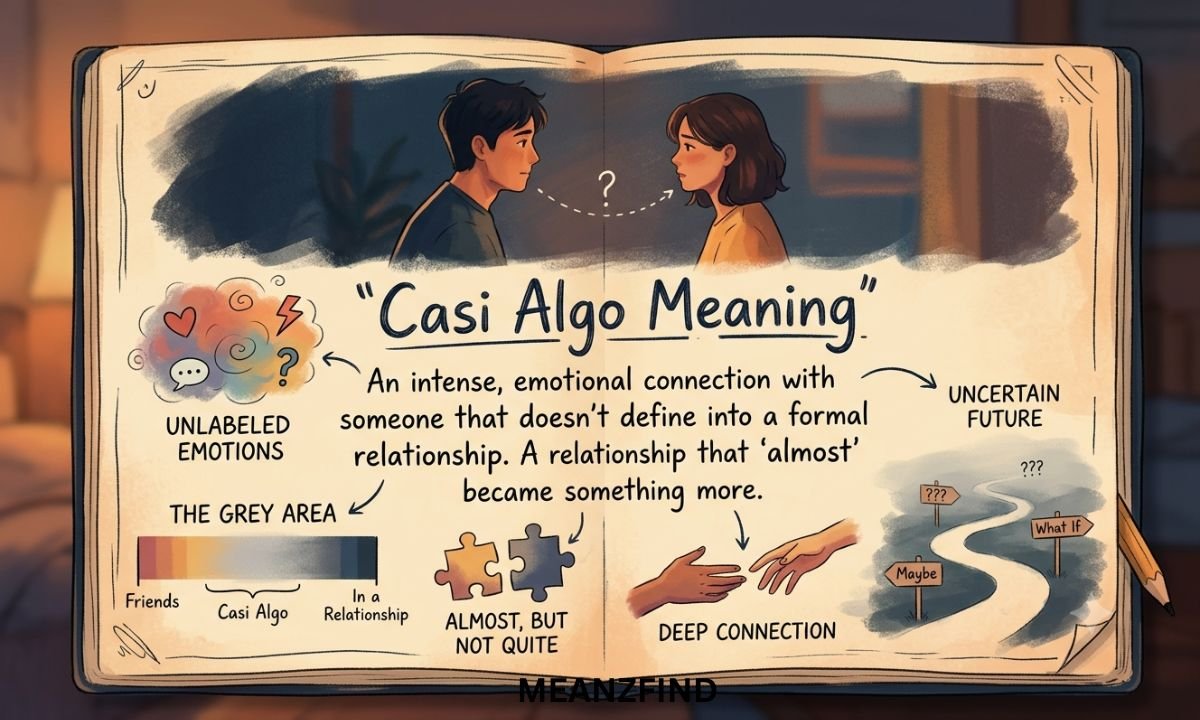
Have you ever heard the phrase “Casi Algo” and wondered what it truly means? This Spanish expression has caught the attention of many music lovers and language learners alike. It carries a deep emotional weight that goes beyond a simple translation. In this article, we will break down its true meaning in simple words.
“Casi Algo” literally translates to “Almost Something” in English. It describes a situation that almost became real but never fully did. Think of a relationship or moment that felt close to perfect, yet stayed just out of reach. This phrase captures that bittersweet feeling perfectly.
Many people relate to this phrase because it speaks to a common human experience. We all have had a “casi algo” moment in our lives, whether in love or life in general. Understanding this phrase helps us connect with the emotions behind the words. Let’s explore its meaning, origin, and everyday use in detail.
What Does Casi Algo Mean?
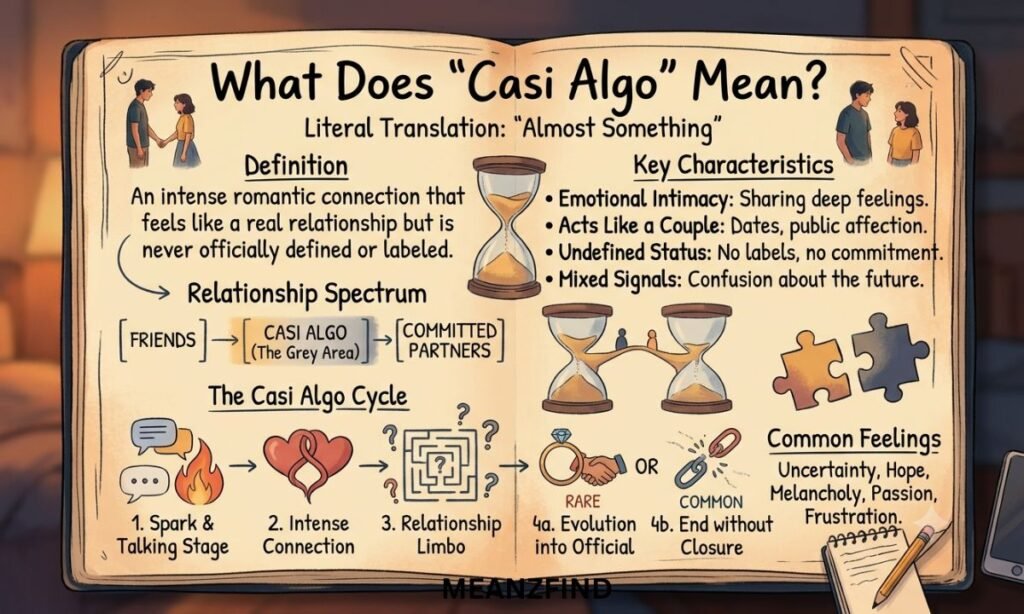
“Casi algo” is a Spanish phrase that means “almost something” in English. People use it to describe a connection with another person that never became official.
Think about it like this. Two people talk every day. They flirt. They share secrets. They act like a couple. But they never say the words “I love you” or “Will you be my boyfriend/girlfriend.” That in-between space is casi algo.
The phrase is short, but it carries a lot of feeling. It is used to describe:
- A romance that almost happened
- A friendship that almost turned into love
- A relationship that stayed stuck at “almost”
Casi algo is not a real relationship. It is not just friendship either. It sits in the middle, and that middle space can feel confusing and painful.
Quick definition for search purposes: Casi algo means “almost something” and is used to describe an emotional or romantic connection that never became official or complete.
The Origin of Casi Algo
The phrase “casi algo” comes from everyday Spanish language. “Casi” means “almost,” and “algo” means “something.” Put together, the words simply mean “almost something.”
Spanish speakers have used this kind of phrase for a long time in casual talk. But it became famous online because of music and social media.
Many Spanish songs use the words “casi algo” or “fui tu casi algo” in their lyrics. These songs talk about heartbreak, missed chances, and love that never fully bloomed. Because the feeling is so relatable, the phrase spread fast.
Social media helped even more. People began posting the phrase on:
- TikTok videos about heartbreak
- Instagram captions
- Twitter (X) posts about almost-relationships
- Spotify playlist titles
Once the phrase became linked to music and memes, English speakers picked it up too. Now, many people search for “casi algo meaning” even if they don’t speak Spanish, because they heard it in a song or saw it in a caption and wanted to understand the feeling behind it.
The phrase caught on because it names something almost everyone has felt at least once. It gives words to a feeling that used to be hard to explain.
Casi Algo in Relationships: What It Looks Like in Real Life
A casi algo does not look the same for every person, but there are common patterns. Here is what it usually looks like when it happens in real life.
Daily Texting Without Labels
The two people talk constantly. Good morning texts. Late night calls. Long conversations about life, dreams, and problems. But if you ask, “What are we?” nobody has a clear answer.
Acting Like a Couple in Private
They may hold hands, hug, or even kiss. They may go on dates. But in public, or to friends, they say “we’re just talking” or “we’re not really together.”
Jealousy Without Commitment
One person may get jealous if the other talks to someone new. But since there was never an official relationship, nobody has the right to say “you hurt me” out loud.
Emotional Closeness With Fear of Labels
Both people may share deep feelings, secrets, and support. Yet one or both avoid using words like “boyfriend,” “girlfriend,” or “dating.” The fear of getting hurt keeps things undefined.
A Sudden Ending Without Closure
Many casi algo stories end quietly. There is no breakup because there was no official relationship. The texting just slows down, and both people are left wondering what happened.
Common signs of a casi algo relationship:
- Deep late-night conversations
- Flirting mixed with mixed signals
- No clear title for the relationship
- Strong feelings that are never fully spoken
- A sudden fade-out instead of a real ending
Why Casi Algo Hits Different Than “Situationship”
Many people think “casi algo” and “situationship” mean the exact same thing. They are close, but there is a small difference in feeling and focus.
A situationship usually describes the structure of a connection — two people acting like a couple without the label. Casi algo focuses more on the emotional ache of almost having something real.
Here is a simple table to show the difference:
| Feature | Casi Algo | Situationship | Talking Stage |
| Main focus | Emotional feeling of “almost” | Lack of clear relationship status | Early stage before dating |
| Language origin | Spanish, “almost something” | English, modern dating term | English, modern dating term |
| Emotional tone | Sad, nostalgic, longing | Casual, undefined | Hopeful, new, exciting |
| Length of connection | Can be short or long | Often long-term and repeated | Usually short, early phase |
| Ending style | Often fades with heartbreak | Can continue for months without change | Moves forward or stops early |
| Common use | Music, poetry, deep feelings | Dating advice, relationship talk | Dating apps, new connections |
Casi algo feels more poetic and emotional. Situationship feels more practical and modern. Both describe an undefined connection, but casi algo often carries more heartbreak and longing in its tone.
People often use “casi algo” when they want to express sadness about lost potential. They use “situationship” when they want to explain their current dating status to a friend.
The Emotional Psychology of a Casi Algo
There is a real psychological reason why a casi algo hurts so much. Experts who study relationships and attachment often explain that unclear situations create more stress than clear ones.
The Brain Likes Clear Answers
Human brains feel calm when things are certain. When a relationship has no label, the brain keeps searching for answers. This search can cause anxiety, overthinking, and constant checking of the phone.
Hope Keeps People Stuck
In a casi algo, there is always a small hope that things will become official one day. This hope can keep a person waiting for months, even years, hoping the other person will finally say the words.
Fear of Rejection Blocks Honesty
Many people avoid asking “What are we?” because they fear the answer. If the connection has no label, nobody officially loses anything by staying silent. This fear keeps both people stuck in the middle.
Grief Without Permission
When a casi algo ends, the person left behind often feels deep grief. But since it was never “official,” others may say, “You weren’t even together, why are you sad?” This makes the pain feel invisible, even though it is very real.
Why casi algo can feel worse than a real breakup:
- There is no clear ending, so closure is hard to find
- Other people may not understand the pain
- The person questions if their feelings were even valid
- Mixed signals leave lasting confusion
- Hope keeps replaying “what if” scenarios in the mind
Understanding this psychology helps people realize their pain is real, even without an official title.
Fui Tu Casi Algo Meaning
“Fui tu casi algo” is a phrase that means “I was your almost something” in English. It is often used in songs, captions, and poems to express regret or sadness about a lost connection.
Breaking down the phrase:
- Fui = I was
- Tu = your
- Casi algo = almost something
Put together, it means: “I was your almost something.”
This phrase is usually said from the point of view of someone who feels forgotten. It expresses that they gave real feelings to a connection, but the other person never fully committed. It carries emotions like:
- Regret
- Longing
- Sadness about missed chances
- A feeling of being replaceable
People often use “fui tu casi algo” in social media captions after a heartbreak, especially when they feel like they meant more to someone than that person meant to admit.
This phrase became especially popular in Spanish music, where singers describe how someone was almost their partner but never fully became one. Because heartbreak is universal, English speakers began using and searching for the phrase too, even in translated or mixed-language posts.
Casi Algo Meaning Beyond Romance: Other Uses of the Phrase
While casi algo is mostly linked to romance, it is not only about love. The phrase can describe any situation where something was close to happening but never fully did.
In Friendships
Sometimes two friends grow closer and closer until it feels like more than friendship. But neither person makes a move, and the moment passes. People may call this a “casi algo” friendship.
In Career and Opportunities
People sometimes use the phrase for missed chances in life, such as:
- A job offer that almost came through
- A business deal that almost happened
- A dream that almost came true
For example, someone might say, “That job was my casi algo — I was so close to getting it.”
In Creative Writing
Writers and poets use “casi algo” to describe near-misses in life. It captures the feeling of standing right at the edge of something big, only for it to slip away.
In General Conversation
Some people even use it jokingly for small daily situations, like almost winning a game or almost finishing a project on time.
This shows that casi algo is really about the feeling of “almost” — and that feeling can apply to many parts of life, not just romance.
Casi Algo on Social Media and in Pop Culture
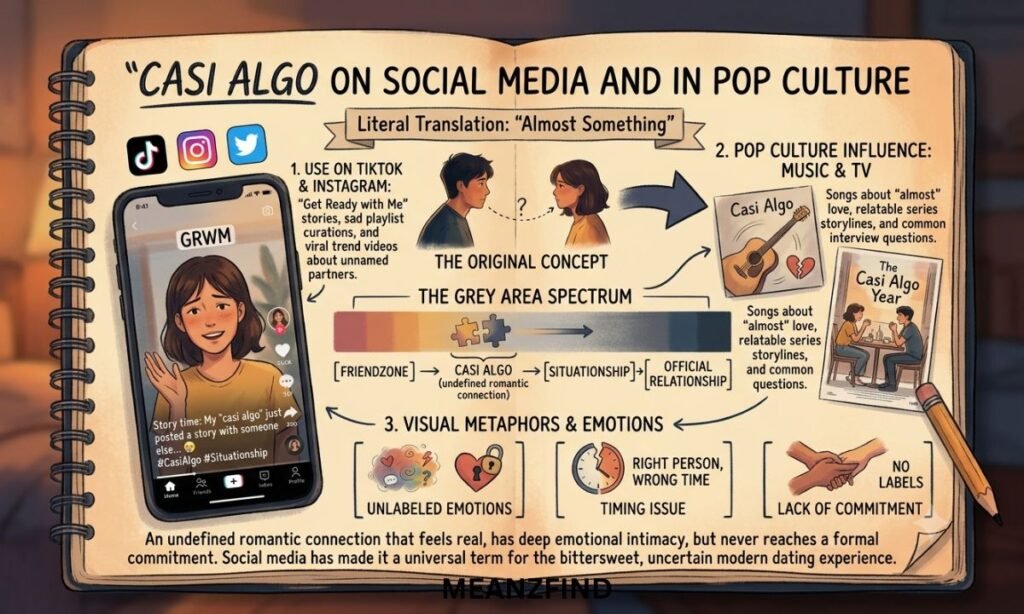
Casi algo became a viral term mainly because of the internet. Social media gave the phrase a stage where millions of people could relate to it instantly.
TikTok and Reels
Short videos with the caption “casi algo” often show:
- Old photos or texts with a former almost-partner
- Sad or emotional music playing in the background
- Captions describing lost love or missed chances
These videos usually get high engagement because so many viewers have felt the same emotion.
Instagram Captions
People often post pictures with captions like “just your casi algo” or “fui tu casi algo” after a breakup or unclear relationship ending. It has become a common way to express heartbreak without writing a long paragraph.
Music and Playlists
Many Spanish-language songs use “casi algo” in their titles or lyrics. Fans create playlists using this phrase to describe the emotional theme of near-love and heartbreak.
Why It Became So Popular
The phrase works well online because it is:
- Short and easy to remember
- Emotionally powerful
- Relatable across cultures and languages
- Useful in captions, songs, and everyday talk
Because dating today often involves unclear situations, texting stages, and undefined connections, “casi algo” gave people the perfect word for something that used to be hard to explain.
How to Navigate a Casi Algo Situation
If you are stuck in a casi algo right now, there are healthy ways to handle it. Here is a simple step-by-step guide.
- Notice your feelings first. Before doing anything, be honest with yourself. Ask if you truly want more, or if you are just comfortable with the attention.
- Ask for clarity. It can feel scary, but asking “What are we?” is often the healthiest step. It removes guessing and forces an honest answer.
- Set a personal time limit. Decide how long you are willing to stay in an undefined situation. If nothing changes after that time, it may be time to move on.
- Watch actions, not just words. Someone may say sweet things, but if their actions don’t match, that is important information. Real interest usually shows through consistent effort.
- Protect your emotional energy. Don’t give 100% of your heart to a connection that is only giving 50%. Balance is important in any real bond.
- Talk to someone you trust. Sharing your feelings with a friend or family member can help you see the situation more clearly.
- Be ready to walk away. If the other person avoids commitment repeatedly, walking away is not weakness. It is self-respect.
A short comparison of healthy vs unhealthy casi algo patterns:
| Healthy Pattern | Unhealthy Pattern |
| Open communication about feelings | Constant mixed signals |
| Clear boundaries respected | Boundaries ignored repeatedly |
| Both people give equal effort | One-sided effort and attention |
| Honest answers when asked | Avoiding direct questions |
| Willingness to define the relationship eventually | Staying undefined for years with no change |
Recognizing these patterns helps you decide whether to stay hopeful or move forward with your life.
Casi Algo Meaning in Relationship
Inside a relationship context, casi algo describes a bond that has almost every feature of a real relationship, except the official label. Both people may act like a couple, but they avoid saying it out loud.
Common relationship-based signs include:
- Spending most free time together
- Meeting each other’s close friends
- Sharing personal problems and support
- Physical affection without a defined status
- Avoiding conversations about “the future”
The danger of this pattern is that one person often wants more, while the other is comfortable staying in the “almost” stage. Over time, this gap in expectations can lead to hurt feelings, confusion, and resentment.
Understanding this meaning helps people recognize when a connection needs an honest conversation, rather than staying silent and hoping things will change on their own.
Casi Algo Meaning in English
In simple English, “casi algo” translates directly to “almost something.” But the deeper meaning goes further than just a dictionary translation.
In English conversations, people use similar ideas through phrases like:
- “We were almost a thing”
- “It never became official”
- “We were more than friends but less than a couple”
- “It just fizzled out before it started”
All of these English phrases try to capture the same feeling that “casi algo” expresses in one short phrase. This is part of why the Spanish phrase became so popular even among English speakers — it says in two words what takes many English sentences to explain.
So when someone asks what “casi algo” means in English, the simplest answer is: an almost-relationship that never got the label it deserved.
FINAL WORD
Casi algo means “almost something” in Spanish. It talks about a bond that never got a real name. Two people act close, but they never call it love. That is the heart of casi algo.
This phrase became big because of songs and social media. Many Spanish songs use casi algo to show heartbreak. People share these songs when they miss someone. The words feel true to their own life.
A casi algo can happen in love or in friendship. It can even happen with a missed chance in life. The feeling is always the same. Something felt close, but it never became real.
In the end, casi algo is about hope and loss together. It shows how hard “almost” can feel. Many people relate to this word today. That is why it means so much to so many.
FOQs
What does casi algo mean in slang?
In slang, casi algo means an “almost relationship” that never got official. It’s used for that in-between stage of feelings.
What is a Calsi algo?
“Calsi algo” is just a common misspelling of “casi algo.” It still means “almost something” in Spanish.
What does algo mean in slang?
In slang, “algo” simply means “something” or “a thing.” It’s often used casually, like saying “there’s algo going on.”
What is a casiago in English?
“Casiago” is a misspelling of “casi algo,” which means “almost something.” In English, people use it for a near-relationship or missed connection.
How is algo used in Spanish?
“Algo” is a common Spanish word meaning “something.” It’s used daily, like “quiero algo” (I want something).
What does algo mean in Greek?
“Algo” is not a Greek word; it’s Spanish for “something.” In English, “algo-” as a prefix (like “algorithm”) actually comes from a person’s name, not Greek.
What does Casi Ago mean?
“Casi Ago” is likely a typo for “casi algo,” meaning “almost something.” It refers to a connection that never fully happened.
Is being “casi algo” a good thing?
It depends on the person. For some it feels exciting and hopeful, but for many it brings confusion and pain.
How do you pronounce casi algo?
It’s pronounced “KAH-see AHL-go.” Say it smoothly, like two simple Spanish words joined together.