
Have you seen the term “WLW” popping up on your TikTok feed or Twitter timeline? You are not alone. This short term is used a lot online, and many people search for its meaning every day. It looks simple, but it carries a big meaning behind it.
WLW stands for “Women Loving Women.” It is used to describe women who are attracted to other women. This includes lesbian, bisexual, and queer women. People use this term to express their identity in a short and easy way.
Social media platforms like TikTok and Twitter have made this term even more popular. Creators use it in captions, hashtags, and video titles. It helps them connect with others who share the same experience. It also helps viewers find content that feels relatable and safe.
In this article, we will explain what WLW really means. We will also look at how it is used on TikTok and Twitter today. By the end, you will understand this term with full clarity. You will also know why it matters to so many people online.
WLW Meaning
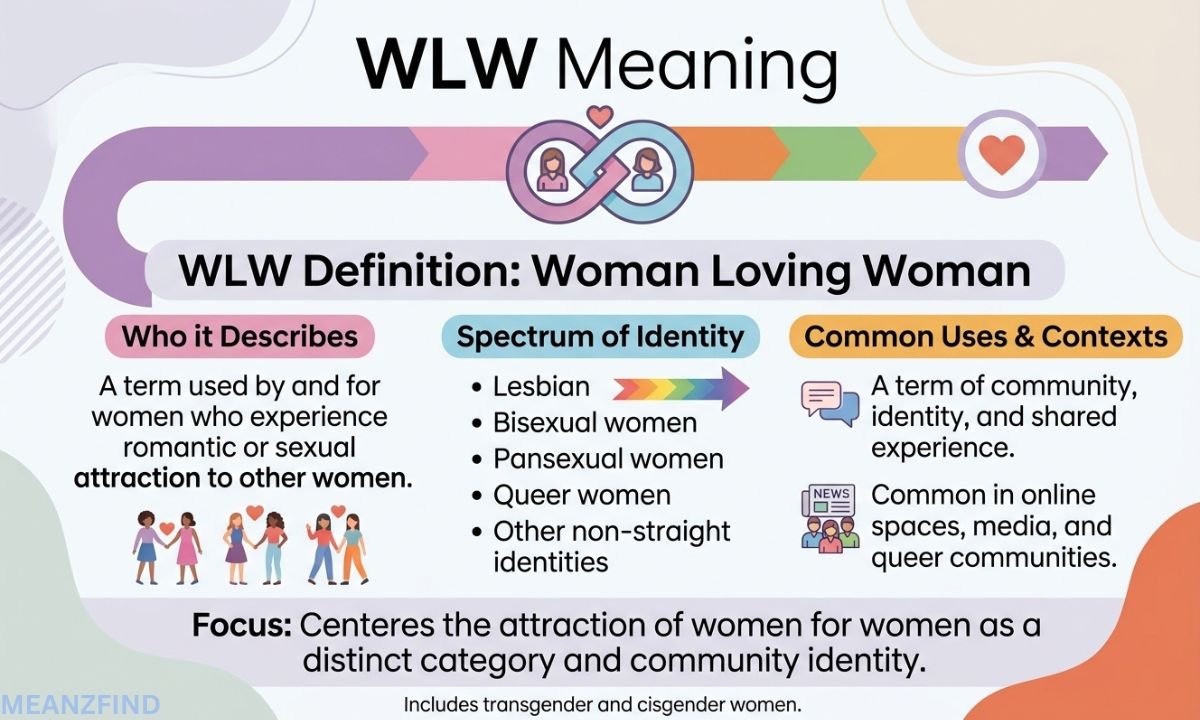
WLW stands for “Women Loving Women.” It is a simple term used to describe women who feel romantic or sexual love for other women. This includes lesbian women, bisexual women, pansexual women, and queer women.
People use WLW as a short and easy way to talk about this identity. It does not point to one single label. Instead, it covers many women who love women in different ways.
The term is friendly and open. It gives space to anyone who feels this kind of love, no matter how they define their own identity. Many people like this word because it is simple, clear, and welcoming.
You will often see WLW in bios, captions, and hashtags online. It has become a common word in modern language, especially among young people who talk about identity and love in a direct way.
WLW is not a new type of identity. It is simply a new way to talk about something that has always existed. Women have loved other women throughout history. The word WLW just gives this experience a short, modern name that fits well in today’s fast digital world.
One reason WLW feels special is that it focuses on the relationship, not just the label. It puts the word “loving” right in the middle. This small detail reminds people that the term is really about connection, care, and love, not just categories.
Why People Search for WLW Meaning
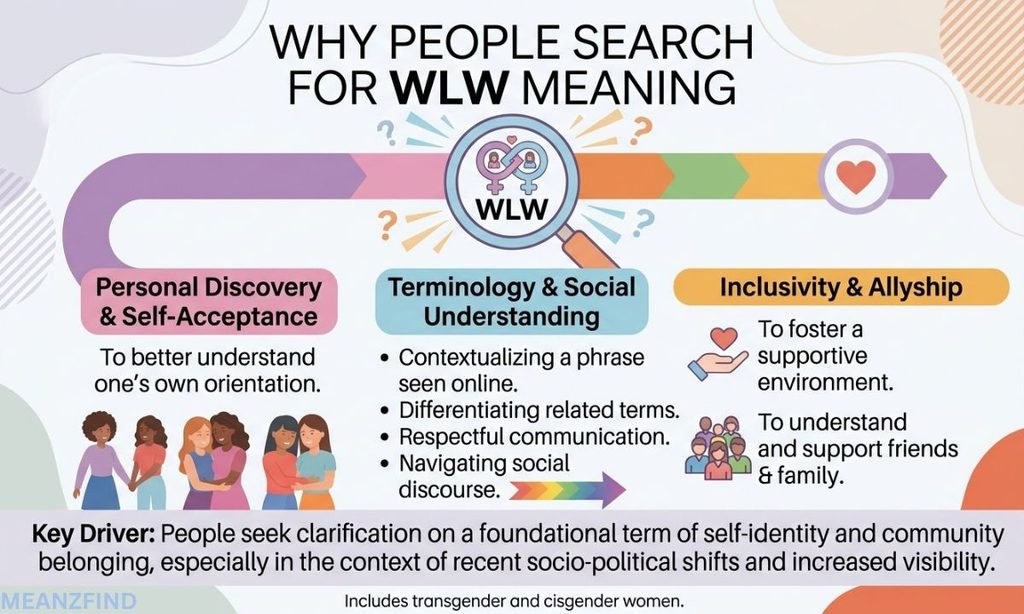
Many people come across the word WLW for the first time on social media, in a text, or in a book description. They search online because they want a fast, clear answer. Here are common reasons people look up this term:
- They saw it in a TikTok caption or hashtag.
- A friend used it in a text message.
- They read it in a book review or movie description.
- They want to understand their own feelings better.
- They are curious about LGBTQ+ language in general.
Whatever the reason, the answer stays simple. WLW means Women Loving Women, and it is used to describe a real, valid, and common experience shared by many people around the world.
WLW Meaning in Text
When you see WLW in a text message or online chat, it almost always means “Women Loving Women.” People use it as a quick way to describe their identity or the identity of someone else.
For example, a person might text a friend, “I just realized I’m WLW.” This means the person loves women. It is a short way to share something personal without using a long sentence.
WLW can also appear in group chats when people talk about movies, shows, or books. Someone might write, “This show has great WLW representation.” This means the show shows women loving women in a good and respectful way.
In texting, short forms save time and space. WLW fits this need perfectly. It lets people express identity or interest in just three letters, which is why it spread so fast in online chats and messages.
Texting culture loves short forms. Words like LOL, BRB, and OMG became normal because they saved time while still carrying full meaning. WLW followed the same pattern. It became a natural part of texting because it did the same job for identity language.
Common Places WLW Appears in Text
WLW shows up in many different types of messages, not just casual chats. Here are some places you might spot it:
- Dating app profiles and bios
- Group chat conversations about shows or books
- Text messages between close friends
- Comment replies on social media posts
- Personal messages when someone is coming out to a friend
Because texting often happens quickly, people rarely stop to explain WLW in full. Most readers already understand it, especially younger users who grew up seeing this term across many apps and platforms.
The Origin and History of WLW
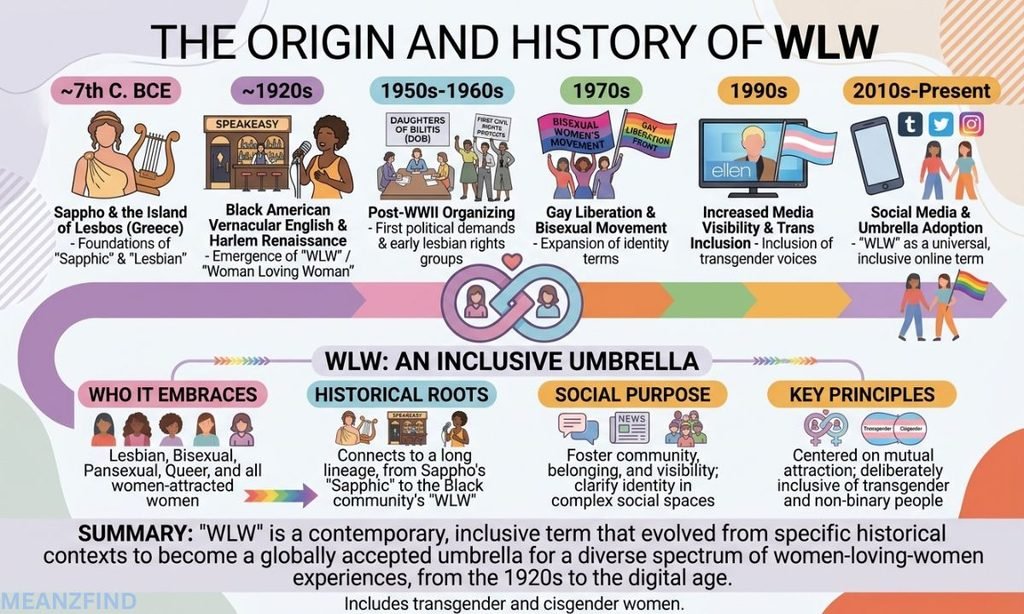
The term WLW grew out of the need for simple language around love and identity. Before WLW became common, people mostly used the word “lesbian” alone. But lesbian did not always feel like the right word for every woman who loved women.
Bisexual and pansexual women often felt left out when only the word lesbian was used. WLW solved this problem. It became an umbrella term, which means one word that covers many smaller groups under it.
The word became popular through online spaces first. Blogs, forums, and social media groups started using WLW as a tag. It made searching for content easier because one word could bring together lesbian, bisexual, and queer women.
Over time, WLW moved from small online spaces into mainstream social media. Today, it is used across TikTok, Twitter, Instagram, and even in everyday conversations. Its growth shows how language changes when people need simple and inclusive words.
Before internet culture, many communities used longer phrases or coded language to talk about women loving women. This was often because open conversation about this topic was not always accepted or safe. As society slowly became more open, language became more direct too.
The rise of the internet changed everything. Chat rooms in the early 2000s gave people a place to talk freely, often for the first time. Many found comfort using short, coded terms like WLW because it felt easier and safer than long explanations.
As acceptance grew across many countries, the need for hiding faded. WLW stopped being a quiet, coded term and became an open, proud one. This shift shows how language can grow stronger and clearer as society becomes more accepting over time.
Key Reasons WLW Became So Popular
- It is short and simple to type.
- It works as an umbrella term for many identities.
- It fits perfectly into hashtags and search terms.
- It feels neutral, friendly, and non-judgmental.
- It spread naturally through online communities.
These reasons combined to help WLW grow from a small internet term into a widely recognized part of modern language.
Quick Timeline of WLW Growth
| Time Period | How WLW Was Used |
| Early Online Forums | Used quietly in LGBTQ+ chat groups and forums |
| Blogging Era | Became a common tag on personal blogs |
| Rise of Social Media | Spread through hashtags on Twitter and Tumblr |
| TikTok and Instagram Era | Became a trending term in captions and videos |
| Present Day | Used widely in texting, social media, and pop culture |
WLW vs Other LGBTQ+ Terms
Many people confuse WLW with other short terms. Each term means something different, so it helps to understand them clearly. Below is a simple comparison to make things easy.
| Term | Full Meaning | Who It Describes |
| WLW | Women Loving Women | Women attracted to women |
| MLM | Men Loving Men | Men attracted to men |
| WLM | Women Loving Men | Straight or bisexual relationships between women and men |
| LGBTQ+ | Lesbian, Gay, Bisexual, Transgender, Queer, and more | A broad group covering many identities |
| Sapphic | From the poet Sappho | Women who love women, often used like WLW |
WLW and Sapphic are close in meaning. Both describe women loving women. Sapphic comes from history and poetry, while WLW is a newer, more direct short form.
WLW is different from LGBTQ+ because LGBTQ+ covers a much bigger group. WLW is more specific. It only talks about women who love women, not the whole community.
Knowing these differences helps you use the right word at the right time. It also helps you understand posts, captions, and conversations more clearly.
Why These Differences Matter
Mixing up these terms is not a huge mistake, but it can cause small misunderstandings. For example, calling a WLW person “MLM” would not make sense, since MLM describes men, not women.
Learning the small differences between these words shows respect. It tells people that you took the time to understand their identity correctly instead of guessing or assuming.
Here is a simple breakdown of how each group connects:
- WLW focuses only on women loving women.
- MLM focuses only on men loving men.
- WLM describes relationships between women and men.
- LGBTQ+ covers all of these groups and more under one large community.
- Sapphic is a poetic, older alternative to WLW with the same basic meaning.
Once you understand these differences, reading social media posts, book descriptions, and personal bios becomes much easier and clearer.
How WLW Is Used in Everyday Texting
People use WLW in many simple and natural ways during texting. It is not a complicated term. It fits smoothly into normal conversations.
Here are common ways WLW appears in texts:
- “I identify as WLW.”
- “She’s WLW too, just like me.”
- “This book has a cute WLW love story.”
- “Looking for more WLW content to watch.”
- “My best friend came out as WLW last week.”
WLW is often mixed with other short forms like LGBTQ+, queer, or bi. People do not always explain the word fully because it is already well known among friends and online communities.
Texting is fast, and short words save time. WLW gives people a quick way to talk about identity, relationships, or content they enjoy without writing long explanations every time.
Some people also use WLW as a question, like “Are you WLW?” This is a polite and simple way to ask about someone’s identity without sounding pushy or rude.
WLW in Different Everyday Situations
WLW is not only used to describe personal identity. It also shows up in casual, everyday conversations about movies, friendships, and daily life. Here are a few more natural examples:
- Talking about a favorite show: “The new season has such a sweet WLW storyline.”
- Making plans: “There’s a WLW meetup happening downtown this weekend.”
- Sharing news: “My cousin just told the family she’s WLW.”
- Recommending content: “You should watch this, it’s a really good WLW movie.”
Because the word fits so naturally into normal sentences, it rarely feels forced or awkward. This is one of the biggest reasons WLW has become such a comfortable and common part of everyday texting language, especially among teens and young adults.
WLW in Social Media and Pop Culture
Social media has helped WLW become a well-known term. Apps like TikTok, Twitter, and Instagram use hashtags a lot. WLW became a popular hashtag because it is short, clear, and easy to search.
On TikTok, creators post videos under tags like #WLW or #WLWTikTok. These videos often show real-life couples, funny skits, or personal stories. People search these tags to find content that feels close to their own life.
Twitter played a big role too. Long before TikTok became huge, Twitter users were already using WLW in bios and tweets. It became a way to find community and support quickly.
Pop culture also picked up the term. Musicians, influencers, and public figures started using WLW openly. This made the word feel normal and accepted rather than hidden or unusual.
Why WLW Trends So Well Online
- It is short and easy to remember.
- It works well as a hashtag.
- It brings a whole community together under one word.
- It feels modern and easy to use in captions.
- It helps people find relatable content fast.
Because of these reasons, WLW keeps trending across many platforms, especially among younger users who enjoy sharing their identity online.
Instagram also plays an important role. Many users add WLW to their bio along with small icons or symbols. This tells other users about their identity right away, without needing a long introduction post.
Pop culture moments also boost the term’s popularity. When a famous singer, actor, or influencer openly talks about being WLW, it often trends across multiple platforms at once. Fans discuss it, share posts, and create content around the announcement, which helps spread the word even further.
Platforms Where WLW Is Most Common
| Platform | How WLW Is Commonly Used |
| TikTok | Hashtags, video captions, trending sounds |
| Bios, tweets, community discussions | |
| Bio descriptions, story highlights | |
| Tumblr | Long-form posts, fan communities, art |
| Discussion threads and support forums |
Each platform gives WLW a slightly different role, but the core meaning always stays the same across every space online.
WLW Representation in TV and Movies
Representation means showing a certain group of people in movies, shows, or books. WLW representation means showing women who love women as characters on screen.
In the past, this kind of representation was rare. Many old shows and movies avoided showing WLW relationships. When they did appear, the stories were often sad or the characters faced only struggle and pain.
Modern shows are changing this pattern. More and more series now show WLW couples living happy, normal lives. These stories often include love, friendship, family, and everyday moments, just like any other couple.
Good WLW representation matters for a few important reasons:
- It helps young viewers feel less alone.
- It shows different types of love as normal and valid.
- It gives writers new and interesting stories to tell.
- It builds understanding among viewers who may not know much about WLW identities.
Fans often talk about their favorite WLW characters on social media. This creates strong online communities where people share fan art, discussions, and support for these stories.
As more shows include WLW characters with care and respect, representation continues to grow stronger and more positive across TV and movies.
What Makes Good WLW Representation
Not all representation is equal. Some stories handle WLW characters with care, while others use them only as a small side detail without real depth. Good representation usually includes a few key things:
- The characters feel real, with full personalities beyond their identity.
- Their story includes joy, not just struggle or sadness.
- They are treated with the same respect as any other character.
- Their relationships are shown naturally, just like any other couple.
- The identity is not used only for shock value or drama.
Viewers often notice the difference between shows that truly care about WLW representation and shows that add it only to seem trendy. Audiences today expect real, thoughtful storytelling, and creators who deliver this often gain loyal, supportive fan communities.
Is WLW Considered Offensive or Appropriate?
WLW is not an offensive word. It is a respectful and accepted term used by the community itself. Many women who love women use WLW proudly to describe their own identity.
The word becomes a problem only when it is used to mock, tease, or make fun of someone. Like any word, tone and intention matter. Using WLW kindly and correctly is completely appropriate.
It is best to let people choose their own labels. Some women may prefer WLW, while others may prefer lesbian, bisexual, queer, or another word. It is polite to use the word a person chooses for themselves.
Simple Rules for Using WLW Respectfully
- Use it only to describe, not to judge.
- Do not force the label on someone else.
- Ask politely if you are unsure how someone identifies.
- Avoid using it as a joke or insult.
- Support the word’s real meaning: love and identity.
When used correctly, WLW is simply a helpful and clear term. It allows open and respectful conversations about identity and relationships.
How to Respond If You Are Unsure
Sometimes people feel nervous about using new terms because they worry about making a mistake. This is completely normal. The best approach is to stay calm, polite, and open to learning.
If you are unsure whether someone identifies as WLW, it is always better to ask gently rather than assume. A simple, respectful question shows that you care about getting it right.
Here are a few polite ways to handle uncertainty:
- Ask directly but kindly: “How do you like to describe your identity?”
- Listen carefully to the words a person uses about themselves.
- Use the same words they use, not your own guess.
- Apologize simply if you make a small mistake, then move on.
- Avoid making a big deal out of small misunderstandings.
Respect and kindness matter far more than getting every word perfect on the first try. Most people appreciate genuine effort and understanding.
WLW Community and Support in the USA
The WLW community in the USA is large, active, and growing every year. Many cities host events, meetups, and pride celebrations that welcome WLW individuals and allies.
Support groups exist in schools, colleges, and local communities. These groups give a safe space for WLW women to talk, share experiences, and build friendships with people who understand them.
Online spaces also offer strong support. Social media groups, forums, and apps connect WLW individuals across different states. This is especially helpful for people living in smaller towns where local support may be limited.
Common Types of WLW Support in the USA
| Type of Support | What It Offers |
| School Clubs | Safe spaces for students to meet and talk |
| City Pride Events | Public celebration and community building |
| Online Forums | Advice, friendship, and shared experiences |
| Counseling Services | Mental health support for identity and family issues |
| Social Media Groups | Daily connection and instant community support |
Support matters a lot because many WLW individuals face questions from family or friends. Having a strong community helps people feel confident, safe, and understood as they navigate their identity.
Across the USA, more organizations continue to grow their support systems each year, making life easier and safer for WLW individuals of all ages.
Why Community Support Matters So Much
Feeling accepted plays a huge role in a person’s happiness and mental health. When WLW individuals find supportive friends, family, or groups, they often feel more confident and secure in daily life.
On the other hand, a lack of support can make things much harder. This is why so many organizations across the country focus heavily on building safe, welcoming spaces for WLW individuals of every age group.
Some helpful things a strong support system can offer include:
- A safe place to talk without judgment
- Friendship with people who share similar experiences
- Guidance for families learning to understand and support their loved ones
- Access to mental health resources when needed
- A sense of belonging within a larger community
Communities across the USA continue working hard to make these support systems stronger, more accessible, and more welcoming every single year.
WLW in Books and Literature
Books have played a powerful role in WLW representation. Long before social media existed, many readers found comfort and understanding through WLW stories in novels.
Early WLW literature was often hidden or coded because open writing about this topic was not accepted at the time. Writers used careful hints and symbols to tell these stories safely.
Today, WLW books are published openly and proudly. Many popular young adult novels now include WLW main characters. These books cover many genres, including romance, fantasy, mystery, and everyday teen life.
Popular Genres Featuring WLW Stories
- Young Adult Romance
- Fantasy and Adventure
- Historical Fiction
- Mystery and Thriller
- Contemporary Coming-of-Age Stories
Readers enjoy WLW books because they offer relatable love stories that feel real and meaningful. Book clubs and online reading communities often create special lists just for WLW literature.
As publishing continues to grow more open, WLW books keep increasing in number, giving readers more choices than ever before.
Why WLW Books Matter to Readers
Books offer something social media cannot always give: deep, slow storytelling. Readers can spend hours inside a character’s mind, understanding their thoughts, fears, and hopes in a way short videos or posts cannot fully capture.
For many young readers, finding a WLW character in a book feels like finding a mirror. It shows them that their feelings are normal and that stories like theirs deserve to be told with care and detail.
Libraries and schools have also started adding more WLW books to their shelves. This small change helps normalize these stories for younger readers who may be searching for characters that feel similar to themselves.
Online reading communities, such as book clubs and review platforms, often create special recommendation lists just for WLW literature. This makes it much easier for readers to discover new stories that match exactly what they are looking for.
WLW Meaning on TikTok
TikTok has become one of the biggest platforms for WLW content. Many young creators use the app to share their personal stories, relationships, and daily life as WLW individuals.
On TikTok, WLW often appears in video captions, comment sections, and trending sounds. Creators use it to label their content so that other WLW viewers can find and enjoy it easily.
Some common TikTok WLW content includes:
- Couple videos showing daily life
- “Coming out” story videos
- Funny skits about WLW dating
- Advice videos for young WLW viewers
- Duets and reactions to WLW topics
TikTok’s algorithm shows users content based on what they watch and like. Because of this, once someone interacts with WLW videos, they often see more of this content in their feed.
This creates strong online communities where people feel seen and supported. TikTok has truly helped bring WLW conversations into mainstream social media in a fun and easy way.
Tips for Finding Good WLW Content on TikTok
If you want to explore WLW content on TikTok, a few simple habits can help you find better, more meaningful videos:
- Search direct hashtags like #WLW or #SapphicTikTok.
- Follow creators who focus on real-life stories rather than only trends.
- Like and comment on videos you enjoy, since this helps the algorithm show similar content.
- Explore comment sections, where viewers often share more recommendations.
- Be patient, since the algorithm takes a little time to learn your interests.
TikTok continues to update its features often, but the WLW community remains a steady and active part of the platform, offering endless videos, stories, and connections for anyone interested in this content.
WLW Meaning: Women Loving Women
At its core, WLW simply means “Women Loving Women.” This phrase captures the full meaning in the clearest way possible. It focuses on love and connection between women.
This term does not limit itself to one narrow definition. It welcomes lesbian, bisexual, pansexual, and queer women under one shared and simple phrase.
The beauty of this meaning lies in its openness. It allows many different women, with many different experiences, to feel included and represented by the same three letters.
Understanding this core meaning helps make sense of every other way WLW is used, whether in texting, social media, books, or television. It always comes back to this same simple idea: women loving women.
Breaking Down the Phrase Word by Word
Sometimes it helps to look at each word separately to fully understand the full meaning:
- Women – refers to the people involved in the relationship or attraction.
- Loving – refers to romantic or emotional connection, not just friendship.
- Women – repeated again to show that both people in the relationship are women.
When you put these three simple words together, you get a clear and complete picture. WLW is not a confusing or complicated term once you break it down this way. It is simply a short label for a real and meaningful type of love.
WLW Meaning in Chat
In online chat rooms and messaging apps, WLW works the same way it does in regular texting. It offers a fast and easy way to talk about identity without long explanations.
Chat platforms like Discord, group chats, and dating apps use WLW often. Many dating app bios include the term to help match people with similar interests and identities.
Here are simple chat examples using WLW:
- “New here! I’m WLW, looking for friends.”
- “This server is a safe space for WLW folks.”
- “Any WLW book recommendations?”
- “Just matched with another WLW user!”
Chats often move fast, so short and clear terms like WLW help conversations flow smoothly. It removes the need for long identity explanations every single time.
Because of its simplicity, WLW remains one of the most commonly used identity terms across many chat platforms today.
Chat Etiquette Around WLW
Good manners still matter in online chats, even when conversations move fast. A few simple habits can make chat spaces feel more welcoming for everyone:
- Do not pressure anyone to explain their identity if they do not want to.
- Use the term the same way the other person uses it.
- Avoid turning someone’s identity into a joke.
- Support new members who mention being WLW for the first time.
- Keep conversations kind, especially in group chats or public servers.
Following these small habits helps keep online chat spaces safe, friendly, and welcoming for WLW individuals and everyone else in the community.
WLW Meaning Explained
To explain WLW in the simplest way possible: it is a short term for women who love other women. That is the full and complete meaning behind the three letters.
It works as an umbrella term. This means it holds many identities together under one word, including lesbian, bisexual, and queer women who are attracted to women.
People often search for “WLW meaning explained” because they see the term online and want a clear and simple answer. The explanation stays the same everywhere: Women Loving Women.
This clear and steady meaning is one reason the term has stayed popular for so long. It does not change often, which makes it easy for people to understand no matter where they see it used.
A Simple Summary Anyone Can Understand
If someone asks you to explain WLW in one sentence, you could say: “WLW means women who love other women, romantically or emotionally.” That single sentence covers the full and complete meaning.
This is exactly why the term became a favorite for Featured Snippets and quick online searches. It answers the question directly, without extra confusion or unnecessary detail.
Whether a person is five years old or fifty years old, this explanation stays easy to follow. That simplicity is one of the biggest strengths of the term WLW.
WLW Meaning Slang
WLW works like modern internet slang. Slang words are short forms that people use quickly in everyday talk, especially online. WLW fits perfectly into this style of language.
Just like other popular slang terms, WLW spread fast because it was easy to type, easy to remember, and easy to understand once explained.
Other Similar Slang Terms in LGBTQ+ Language
| Slang Term | Meaning |
| WLW | Women Loving Women |
| MLM | Men Loving Men |
| NB | Non-Binary |
| Ally | Someone who supports the LGBTQ+ community |
| Out | Openly sharing one’s identity |
Slang terms like WLW often start in small online groups before spreading to bigger platforms. Once enough people understand and use a term, it becomes a normal part of everyday language.
Today, WLW is widely recognized slang, especially among younger generations who grew up using social media and texting as their main form of daily communication.
How Slang Words Like WLW Spread
Slang usually follows a simple pattern before it becomes widely known. Understanding this pattern shows exactly how WLW grew into such a common term:
- A small group starts using the word regularly.
- Online platforms help the word spread faster through hashtags and posts.
- More people see it, understand it, and begin using it themselves.
- The word appears in mainstream conversations, shows, and articles.
- It becomes a normal, accepted part of everyday language.
WLW followed this exact path. What started as a small community term is now understood by millions of people, showing just how powerful online slang can become over time.
WLW Meaning Acronym
An acronym is a short word made from the first letters of a longer phrase. WLW is a perfect example of this. It takes the first letters of “Women Loving Women” and turns them into one simple term.
Acronyms are useful because they make long phrases much shorter and easier to say or type. Instead of writing “Women Loving Women” every time, people can simply write WLW.
This acronym style is common in many areas of language, not just LGBTQ+ terms. It helps speed up communication while keeping the full meaning clear to anyone who already knows the term.
Because WLW is now widely known, most people online instantly understand the acronym without needing extra explanation, which shows just how deeply it has become part of everyday digital language.
Other Common Acronyms You Might See Alongside WLW
Since WLW often appears with other short forms, it helps to know a few related acronyms as well:
| Acronym | Full Meaning |
| WLW | Women Loving Women |
| MLM | Men Loving Men |
| GNC | Gender Non-Conforming |
| SGL | Same Gender Loving |
| POC | Person of Color |
Knowing these related acronyms makes it easier to fully understand conversations, captions, and posts where several short forms may appear together. Once you understand one, the rest become much easier to recognize and remember.
FINAL WORDS
WLW is more than just a short term you see online. It stands for “Women Loving Women” and represents a real part of many people’s identity. Understanding this term helps us better understand the people around us. It also helps create a more open and respectful online space.
TikTok and Twitter have played a big role in making this term popular. Creators use it to share their stories and connect with others. Hashtags with WLW help people find content that feels familiar and safe. This is why the term keeps trending across social media platforms.
Knowing simple terms like this can make online spaces feel friendlier. It also helps you understand captions, posts, and videos better. When you know what WLW means, scrolling through social media becomes easier. You will not feel confused when you see it again.
Language keeps changing, especially online. New terms and short forms appear every day. Learning them helps you stay updated and connected. It also shows that you care about understanding different communities.
In the end, WLW is a simple term with a meaningful purpose. It gives women a way to express who they are. It also helps others learn and support them. Small terms like this can create big understanding when used with respect.
FAQs
Is it okay to identify as “WLW”?
Yes, it is completely okay. Many women proudly use WLW to describe their identity and feelings toward other women.
What is a WLW relationship?
A WLW relationship is a romantic or emotional relationship between two women. It can include lesbian, bisexual, or queer women loving each other.
What does WLW mean on TikTok?
On TikTok, WLW means “Women Loving Women” and is used in hashtags and captions. Creators use it to share stories, couples’ content, and relatable videos.
What is WLW for men?
WLW is only for women, so it does not apply to men. Men who love men use the term MLM instead.
Does WLW Include Bisexual Women?
Yes, WLW includes bisexual women who are attracted to other women. It is an umbrella term covering lesbian, bisexual, pansexual, and queer women.
How Do You Use WLW in a Sentence?
You can use WLW just like any short identity term, such as “She identifies as WLW.” It fits naturally into texts, bios, and casual conversations.
Is WLW the Same as Sapphic?
WLW and Sapphic mean almost the same thing, both describing women who love women. Sapphic is an older, more poetic word, while WLW is a newer, simpler term.