
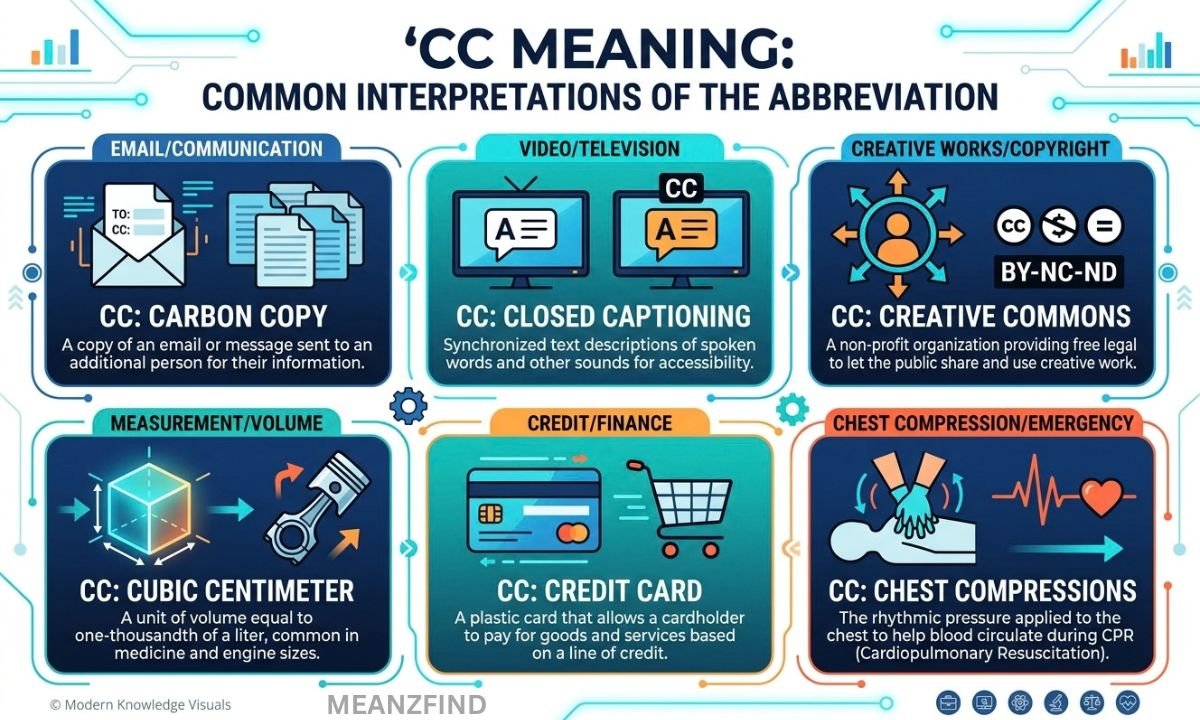
Have you ever seen “CC” in an email and wondered what it means? You are not alone. This small term shows up almost every day in emails, letters, and even text messages. Many people use it without knowing its real meaning.
CC stands for “carbon copy.” It comes from an old method of copying letters using carbon paper. Back then, people placed a sheet of carbon paper between two pages to make a copy while writing. Today, the term has moved into our digital world, especially emails.
In this article, we will explain what CC means in simple words. We will also show you how to use it the right way. By the end, you will feel confident using CC in your daily emails and messages.
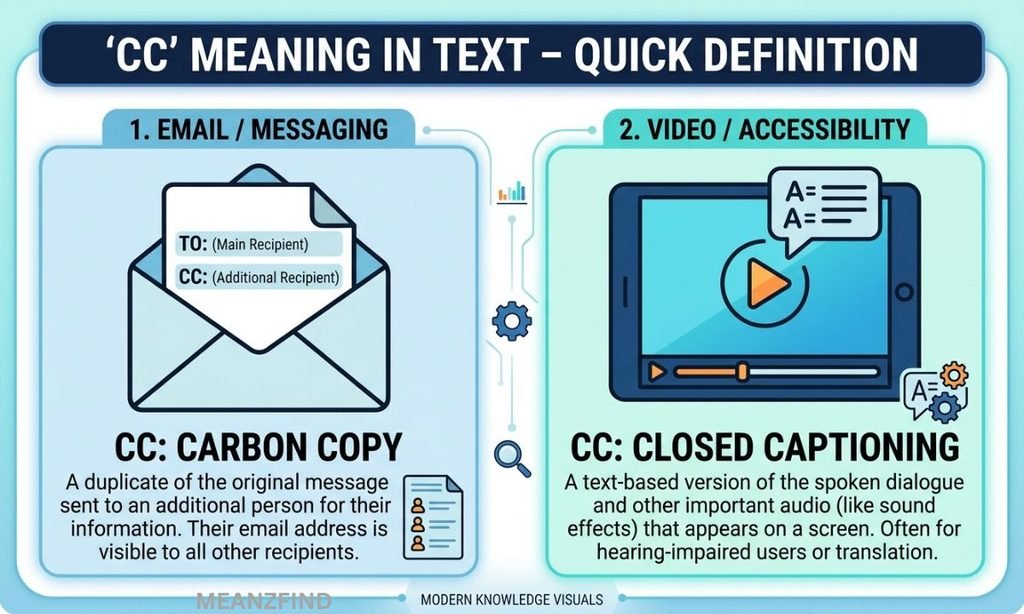
CC Meaning in Text – Quick Definition
Simple Definition
CC stands for “Carbon Copy.” It is a simple way to send the same message to more than one person at the same time. When you “CC” someone, you are sending them a copy of your message, but they are not the main person you are talking to.
Think of it like this. You write a letter to your friend, but you also want your teacher to see it. You add your teacher’s name in CC. Now both people get the same letter, but your friend is the main reader.
CC is used mostly in emails, but people also use it in texts, group chats, and social media. It helps keep other people updated without making them reply directly.
Key Points
Here are the most important facts about CC in one place:
- CC means “Carbon Copy.”
- It lets you send one message to many people at once.
- The main person is in the “To” field. Others are in “CC.”
- People in CC are not expected to reply, but they can if they want.
- CC is different from BCC, where names stay hidden.
- CC is used in emails, texts, workplace chats, and even casual conversations.
Quick Examples
Simple examples make everything easier to understand. Here are a few:
- “I emailed the report and CC’d my manager.”
- “Please CC me on that message so I know what’s happening.”
- “She CC’d the whole team on the new schedule.”
These examples show how CC works in real, everyday language. It’s short, quick, and easy to use once you understand it.
Origin & Background of the Term CC
The Typewriter Era
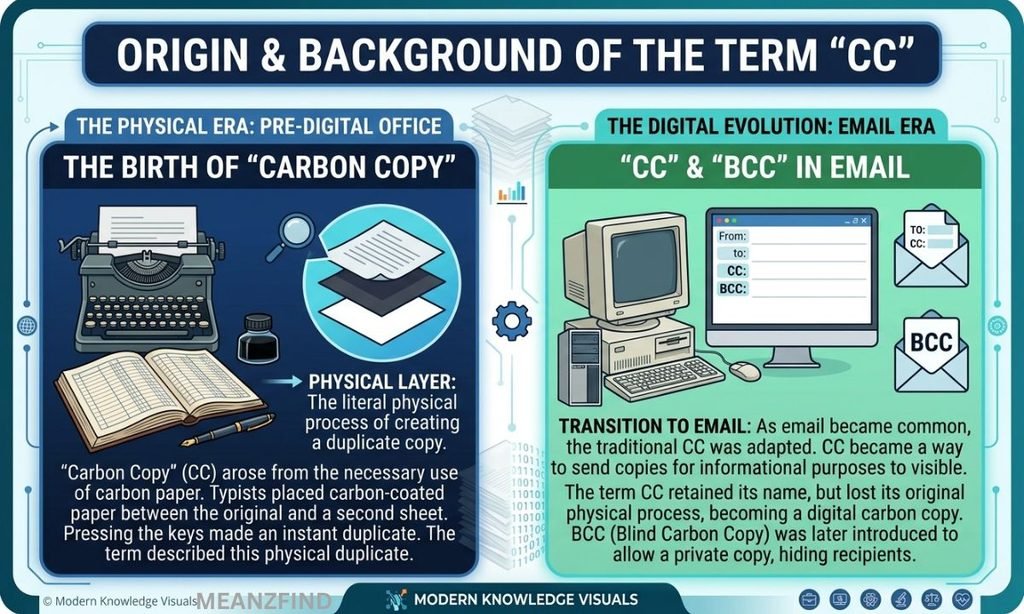
The term CC did not start with computers. It started a long time ago with typewriters. People used a special thin paper called carbon paper to make copies of letters.
When someone typed a letter, they placed carbon paper between two blank sheets. The pressure from typing created a second copy automatically. This second copy was called the “carbon copy.”
Offices used this method for many years before computers existed. It helped bosses, workers, and clients all get the same information without retyping the letter again.
Email Adoption
When email became popular, people needed a similar idea. They wanted a way to send the same message to more than one person. So, email systems added a “CC” field.
This field worked just like the old carbon paper idea, but faster and digital. You could now send one email and copy several people instantly. No paper, no typing twice, just one click.
This made office communication much quicker. Everyone could stay updated on important messages, decisions, and updates without extra effort from the sender.
Internet & Messaging Culture
As the internet grew, the word “CC” moved beyond email. People started using it in group chats, WhatsApp, and even social media comments. It became a common short word online.
Today, “CC” is part of internet culture. People use it casually, sometimes even as a joke. For example, someone might CC a friend in a message just to include them in a private moment or an inside joke.
This shows how an old office term became part of daily online conversations. It changed from a business tool into a fun, flexible word used by people of all ages.
Real-Life Conversations Using “CC”
Seeing CC in real conversations helps make the meaning clear. Below are examples from different platforms people use every day.
WhatsApp Conversation
Example:
Ali: Hey, I’m sending the project file to the client.
Ali: CC-ing you so you know what I sent.
Sara: Got it, thanks for keeping me in the loop!
This shows how CC works even in casual chat apps like WhatsApp. It’s not just for formal emails anymore.
Instagram DM Example
Example:
User1: I told him to check the new post.
User1: CC you too, just in case you want to see it.
User2: Haha okay, I saw it already!
Here, CC is used in a playful, friendly way. It shows that CC has moved from office language into casual social media talk.
Text Message Example
Example:
Mom: I’m telling your brother about the family trip.
Mom: CC-ing you too so you don’t miss anything.
You: Thanks Mom, sounds fun!
This shows CC being used even in family text messages. It keeps everyone updated in one simple line.
TikTok Comment Style
Example:
Comment: “This tip changed my life! CC my sister, she needs to see this.”
On TikTok, CC is used to tag or mention someone in comments. It’s a fun, modern twist on the original meaning, showing how flexible the word has become.
Emotional & Psychological Meaning Behind Using CC
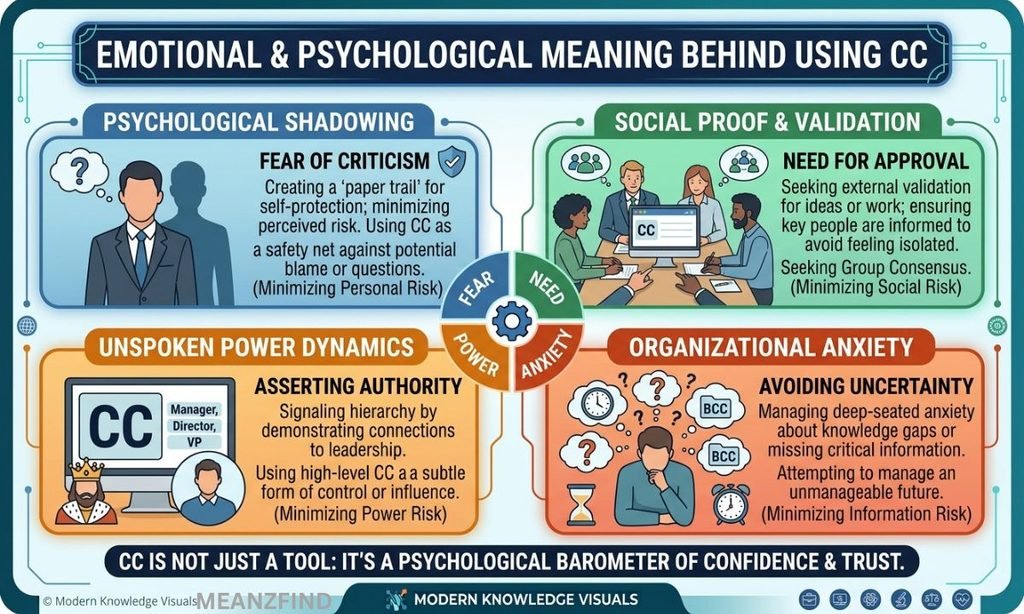
CC is more than just a technical word. It carries feelings and intentions too. Understanding this can help you use CC the right way.
Transparency
When someone uses CC, they often want to be open and honest. It shows they are not hiding anything. Everyone included can see the full message.
This builds trust between people. If a coworker CCs their manager, it shows they are not trying to keep secrets. Everything is out in the open.
Accountability
CC can also create responsibility. When more people see a message, the sender may feel more careful about what they write. It reminds people to stay professional and clear.
At the same time, it can hold others accountable too. If someone was told something important through CC, they cannot say later that they didn’t know.
Inclusion
Sometimes, CC is simply about including someone. It says, “I want you to be part of this conversation, even if you don’t need to reply.” It makes people feel valued and informed.
This is common in friend groups or family chats. A quick CC can make someone feel remembered, even in a small message.
Authority or Pressure
However, CC can sometimes feel like pressure. If a boss is CC’d on an email, employees might feel nervous. They may worry their work is being watched closely.
This is called the “CC pressure” feeling. It’s important to understand this side too, especially in workplace communication, where tone and trust matter a lot.
Usage of CC in Different Contexts
CC changes meaning slightly depending on where it’s used. Let’s look at different situations.
Social Media
On social media, CC is often casual. People use it to tag friends in comments or messages. It’s less formal and more about sharing something fun or interesting.
Friends & Relationships
Among friends, CC is playful. It might mean, “I want you to see this too,” without any serious reason. It’s a light and simple way to include someone.
Workplace Communication
In offices, CC is more formal. It usually means keeping someone informed about work, projects, or decisions. It follows professional rules and etiquette.
Casual vs Serious Tone
| Situation | Tone | Purpose |
| Friends chatting | Casual | Fun, inclusion |
| Family texts | Casual | Keeping everyone updated |
| Office emails | Serious | Formal updates, accountability |
| Client communication | Serious | Transparency, professionalism |
Knowing the right tone helps you use CC correctly in every situation, whether it’s fun or formal.
Common Misunderstandings About CC
Many people misunderstand how CC works. Let’s clear up the most common mistakes.
Mistake 1: Thinking CC Means Reply
Some people think that if they are CC’d, they must reply. This is not true. CC is only for information. You don’t have to respond unless it’s necessary.
Mistake 2: Using CC Instead of BCC
Another common mistake is using CC when privacy is needed. If you don’t want people to see who else received the message, you should use BCC, not CC.
Mistake 3: Overusing CC
Adding too many people in CC can be confusing. It floods inboxes and makes messages harder to manage. Only CC people who truly need the information.
Mistake 4: Assuming CC Requires a Response
Just like the first mistake, some people feel forced to reply because they were CC’d. In reality, CC is meant to inform, not to demand action.
Comparison Table: CC vs Similar Terms
| Term | Meaning | Visibility | Common Use |
| CC | Carbon Copy | Everyone sees who is added | Sharing information openly |
| BCC | Blind Carbon Copy | Hidden from other recipients | Keeping recipients private |
| To | Main recipient | Fully visible | Direct communication |
| Reply All | Responds to everyone | Fully visible | Group conversations |
Key Insight
The biggest difference between CC and BCC is privacy. CC keeps everything open, while BCC hides names. Knowing when to use each one shows good communication skills and respect for privacy.
Variations and Related Expressions
CC is often used with other words to build simple phrases. Here are common ones people use daily.
1. CC Me
This means, “Please add me to this message too.”
2. CC’ing You
This means the sender is currently adding you to the message.
3. CC the Team
This means to include the whole team in the message.
4. CC the Manager
This means adding a manager so they stay informed.
5. CC the Client
This means keeping the client updated on communication.
6. CC Everyone
This means including all relevant people at once.
7. CC for Visibility
This means adding someone just so they can see the update.
8. CC for Record
This means keeping a copy for future reference or proof.
9. CC the Group
This means sharing the message with an entire group chat or list.
10. Double CC
This is a playful way of saying someone is added twice or very intentionally included.
How to Respond When Someone Uses CC
Knowing how to reply builds good communication habits. Here are different reply styles.
Casual Replies
- “Thanks for the CC!”
- “Got it, appreciate you including me.”
Funny Replies
- “Ooh, I made the CC list today!”
- “Feeling important being CC’d, haha.”
Mature / Professional Replies
- “Thank you for keeping me informed.”
- “Noted, I’ll review this shortly.”
Respectful Replies
- “I appreciate being included in this update.”
- “Thanks for the transparency.”
Choosing the right reply depends on the situation, whether it’s a casual chat or a formal work email.
Regional & Cultural Usage
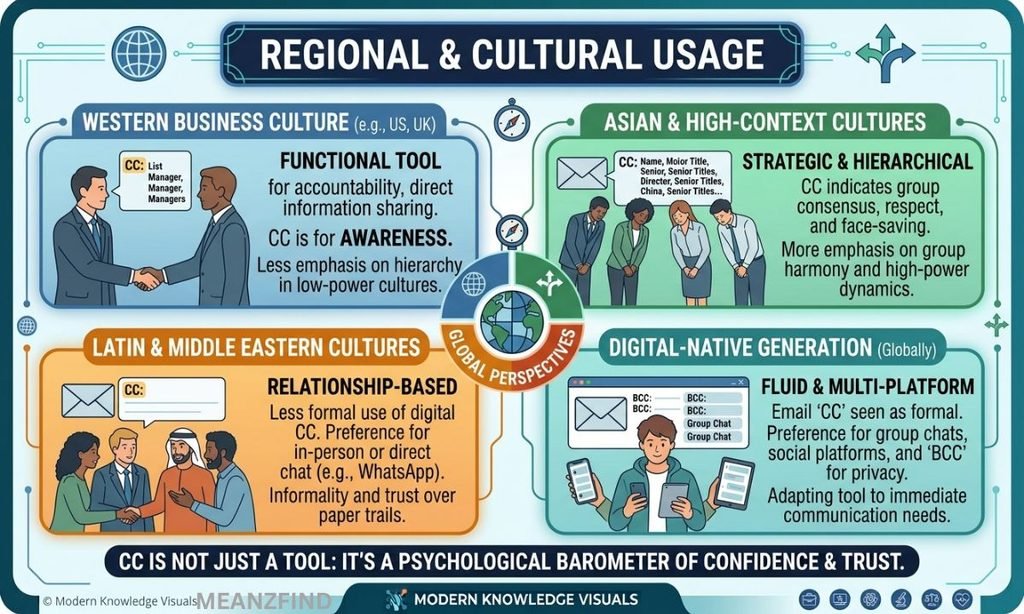
CC is used worldwide, but the way people use it can change slightly by culture.
Western Culture
In Western countries, CC is common in both work and casual settings. People use it freely in emails, texts, and even jokes among friends.
Asian Culture
CC Meaning
In many Asian countries, CC often shows respect. People CC seniors or managers to show they follow proper communication manners.
CC Meaning Email
In email usage across Asia, CC is taken seriously. It reflects hierarchy and respect, especially in formal business settings.
CC Meaning in Chat
In everyday chat apps, CC is used casually, similar to Western style, especially among younger users.
CC Meaning in Bike
Interestingly, in some Asian regions, “CC” also refers to engine size in motorcycles, like “125cc” or “150cc.” Here, CC means “Cubic Centimeters,” a completely different meaning from Carbon Copy.
CC Meaning Motorcycle
This motorcycle meaning is very common in countries like India, Pakistan, and Indonesia, where bike engine sizes are a daily topic of conversation.
Middle Eastern Culture
In Middle Eastern business culture, CC is used formally, often to show respect for hierarchy and to keep senior staff updated on progress.
Global Internet Usage
Across the world, CC continues to grow beyond emails. It now lives inside chats, memes, and casual online talk, proving how flexible language can become over time.
FINAL WORDS
CC is a small term, but it plays a big role in clear communication. It helps you keep people informed without making them the main focus of an email. Once you understand it, using it becomes easy and natural.
Remember, CC is best for people who just need to stay updated. If someone needs to take action, put them in the “To” field instead. This simple rule can make your emails much clearer.
Also, use BCC when you want to hide the recipient list. This keeps everyone’s email address private. It is a small step, but it shows good manners in digital communication.
In the end, knowing the difference between CC, BCC, and To can make you a better communicator. It shows that you respect other people’s time and inbox. With a little practice, you will use these tools like a pro.
FAQs
What does CC mean in text?
CC stands for “Carbon Copy.” It means adding someone to a message so they can see it without being the main person you’re talking to.
What is CC to someone?
CC to someone means sending them a copy of your message just to keep them informed. They don’t need to reply, just stay updated.
What is CC in Gen Z?
For Gen Z, CC often means “tagging” someone in a message or comment so they see it too. It’s used casually, not just formally like in emails.
What does “CC” mean in slang?
In slang, CC means including someone in a chat or post just for fun or awareness. It’s a quick way to say “look at this too.”
What is CC for girls?
CC works the same way for everyone, but girls often use it to include a friend in gossip, updates, or fun posts. It’s a friendly way to say “you should see this.”
What is CC social media?
On social media, CC means tagging or mentioning someone in a comment or post. It lets that person know the content is meant for them too.
What is CC chat?
CC chat means adding someone to a group message or conversation so they can follow along. They can read everything without needing to reply right away.
What is CC in Instagram?
On Instagram, CC usually means tagging someone in a comment or DM. It’s a way of saying, “I want you to see this too.”
What is CC in a relationship?
In a relationship, CC can mean including your partner in a message or update so they stay aware of what’s happening. It shows openness and trust.
Why to CC someone?
You CC someone to keep them informed without making them the main focus of the conversation. It builds transparency and keeps everyone on the same page.